
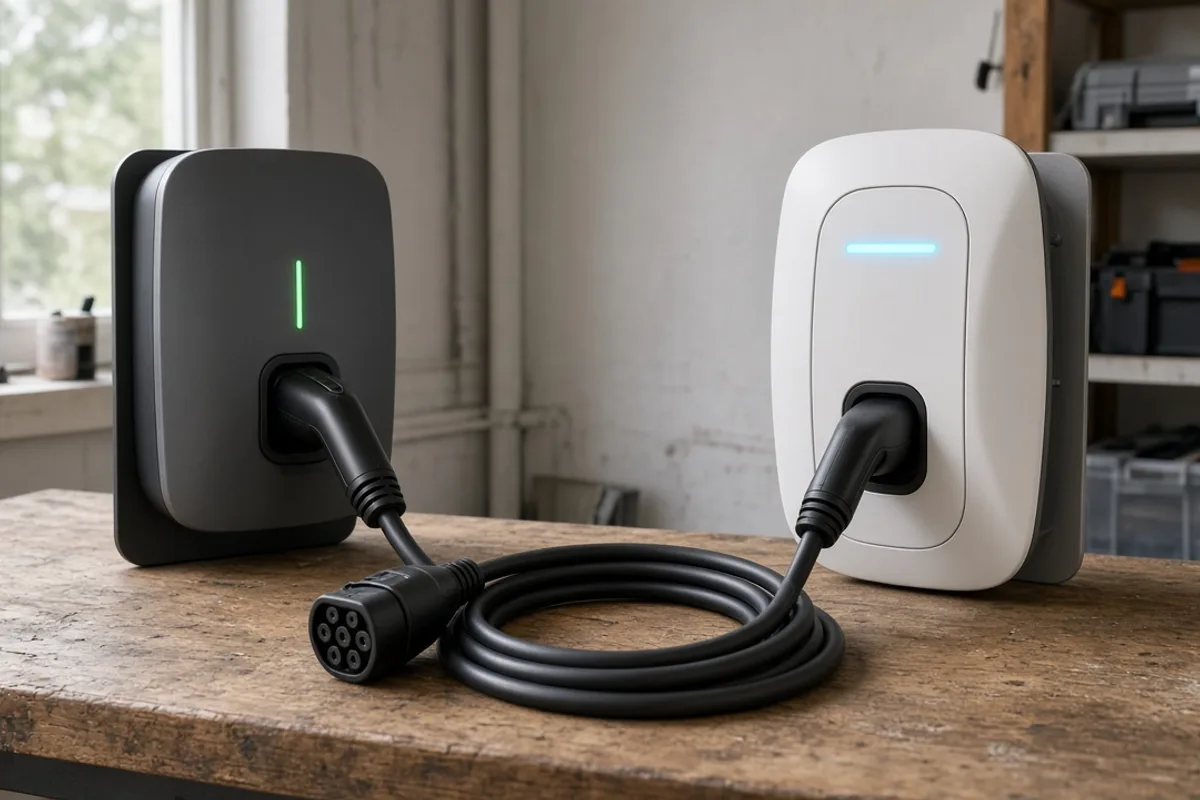
The Tesla Wall Connector works with any Type 2 car, not just Teslas, and its long cable is handy. In the UK it does not include protection against an open-PEN fault, so on the usual PME supply your installer must add a separate PEN-fault device, typically around £100 to £150 for the part, or fit an earth rod. Chargers with that protection built in are often similar or cheaper to install.
The open-PEN requirement
Most UK homes have a PME (TN-C-S) earth. If the supply's combined neutral and earth conductor breaks, metal parts of the car could become live. BS 7671 requires EV charger circuits to be protected against this. Many chargers have the protection built in; the Wall Connector relies on external protection, described in Tesla's UK earthing application note.
- Option 1: a separate PEN-fault protection device fitted alongside the charger
- Option 2: an earth rod creating a separate TT earth for the charger, where ground conditions allow
- Ask each installer which option they propose and price it in the quote
Is the Wall Connector worth it?
The Wall Connector is well built with a long tethered cable and works with every Type 2 car, which helps if you might change brands. But Teslas can schedule smart charging from the car, so a third-party charger loses little. Compare a fitted quote for the Wall Connector, including PEN protection, with one for a charger that has it built in.
Frequently asked questions
Does the Tesla Wall Connector need an earth rod in the UK?
It needs open-PEN protection on a PME supply, which can be either an earth rod or a separate PEN-fault device. Many installers now use the device instead of a rod.
Can a Tesla Wall Connector charge non-Tesla cars?
Yes. It has a Type 2 connector and charges any Type 2 electric car or plug-in hybrid.
Core buying guides
Start with these high-intent guides, then dig into the rest of the library.
Related guides
Sources and further reading
How this guide was prepared
This guide was written by the Local EV Installers Editorial Team. We compare official guidance, legislation and established consumer information, separate general information from project-specific advice, and show publication dates and sources. We do not accept installer accreditation claims at face value.