
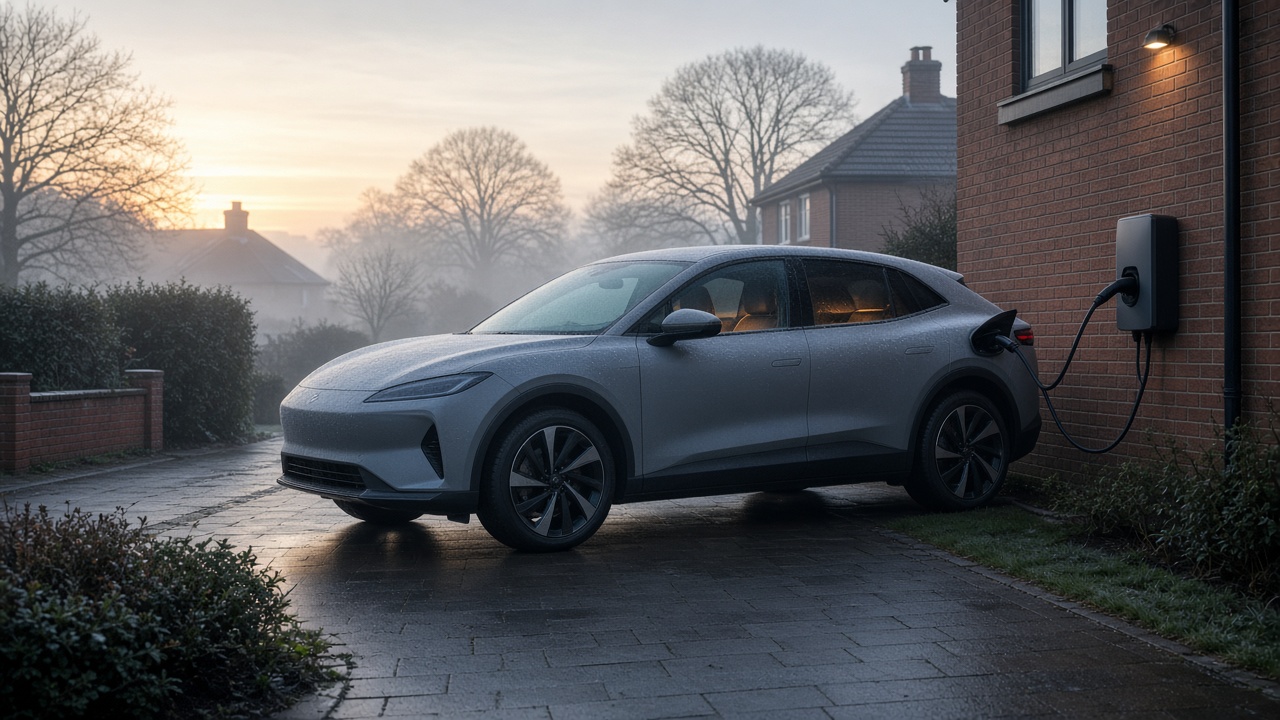
Charging an electric car at home costs about 8p a mile on a standard tariff and about 2p a mile on an off-peak EV tariff. A full charge for a typical 60 kWh car is roughly £17.50 at the current price cap rate, or under £5 overnight on a smart EV tariff.
How the cost is worked out
The cost of a full charge is the battery size in kWh, plus about 10% for charging losses, multiplied by your electricity rate. Cost per mile is your rate divided by how many miles the car travels per kWh, again allowing for losses. The standing charge is left out because you pay it whether or not you charge a car.
Why the tariff matters more than the car
Moving from a standard tariff to an off-peak EV tariff cuts the cost of every charge by around three quarters. For a driver covering 8,000 miles a year that is the difference between roughly £670 and £180 in electricity. A smart home charger schedules charging into the cheap hours automatically; see which chargers work with smart tariffs.
Home charging compared with public charging
Public chargers cost more because the price includes the equipment, the site and VAT at 20%. Rapid chargers are priced highest. If you can park off the street, a home charger usually pays for itself through cheaper electricity; use the installation cost calculator to see the outlay.
Frequently asked questions
How much does it cost to charge an electric car at home?
At the Ofgem price cap rate of 26.32p per kWh (October to December 2026), a full charge costs roughly £10.50 for a small 36 kWh car, about £17.50 for a typical 60 kWh car and around £29 for a large 100 kWh car. On an off-peak EV tariff at about 7p per kWh the same charges cost roughly £3, £5 and £8.
How much does it cost per mile to drive an electric car?
At a typical 3.5 miles per kWh, home charging costs about 8p per mile on a standard tariff at 26.32p per kWh and about 2p per mile on an off-peak EV tariff at 7p per kWh.
Is it cheaper to charge an electric car at night?
Yes, if you are on a tariff with a cheap overnight rate. Smart EV tariffs offer off-peak rates of roughly 6.5p to 8p per kWh, about a quarter of the standard rate. You need a smart meter, and some tariffs need a compatible charger or car.
Why does a full charge use more electricity than the battery size?
Some energy is lost as heat in the charger, cable and battery. This calculator adds about 10%, so a 60 kWh battery takes roughly 67 kWh from the wall for a full charge.
How much does public charging cost compared with home charging?
Public rapid charging typically costs several times more per kWh than home charging, which is why charging at home on an off-peak tariff is the cheapest way to run an electric car. Enter the price shown on the public charger to compare.