
In September 2026, a straightforward UK 7kW home EV charger install on a driveway often budgets around £800 to £1,400 including VAT for the chargepoint, labour and a short cable run. Longer cabling, consumer unit work, three-phase supply, cross-pavement solutions or denser London sites can push the figure higher. Grants may reduce the net cost for eligible flats, renters, landlords or on-street schemes, but rates change, so check GOV.UK before you budget. Always compare written scopes after a survey rather than treating any band as a fixed price.
What a typical home install includes
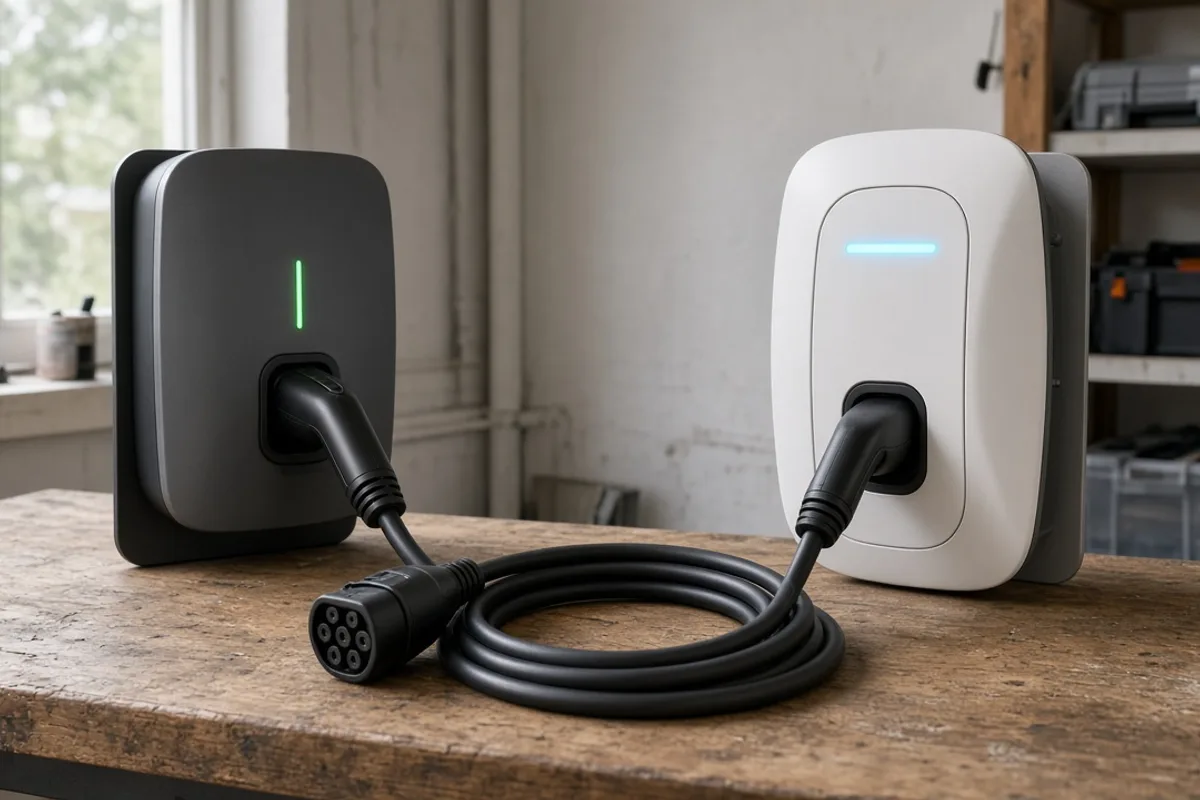
Most UK homeowners asking about EV charger installation cost are comparing a wall-mounted smart chargepoint, usually around 7kW on a single-phase supply, fixed to a garage wall, house wall or post beside off-street parking. The quote should cover the hardware, mounting, dedicated circuit, protective devices, commissioning, smart setup where required, and notification to the electricity network operator where the rules require it.
A short run from a nearby consumer unit to a driveway bay is the cleanest scenario. Once the cable has to travel through lofts, under drives, across gardens or into older fuse boards, labour and materials move quickly. That is why online package prices that look attractive can diverge sharply once an installer has seen the property.
- Hardware: smart wallbox or tethered unit suitable for UK domestic supply
- Electrics: dedicated circuit, correct RCD or equivalent protection, earthing checks
- Civils light touch: short surface or shallow buried run on a simple driveway job
- Paperwork: DNO notification, certification and any grant evidence if you are claiming
September 2026 budgeting bands
Treat the figures below as planning illustrations for September 2026, not guarantees. Local labour rates, parking constraints, scaffold needs and the condition of your electrical installation all matter. A written survey-backed quote is the only reliable number for your address.
Straightforward driveway 7kW installs commonly land in an £800 to £1,400 including VAT band when the consumer unit is suitable and the cable run is short. Add several hundred pounds if you need a longer SWA run, a freestanding post, or more involved making-good. Consumer unit upgrades, three-phase work, listed-building constraints and London access can take projects well above that band.
- Simple 7kW driveway or garage wall: often £800 to £1,400 incl VAT
- Longer cable runs or post mounts: commonly add a few hundred pounds
- Consumer unit upgrade or complex earthing work: can add £300 to £1,000-plus depending on scope
- London, restricted parking or listed properties: budget towards the upper end or above
How grants change the net cost
Government support for home charging has moved on from the older Electric Vehicle Homecharge Scheme (EVHS), which many people still remember as a £350 contribution. By September 2026, OZEV support focuses more tightly on flats and renters, landlords, workplaces and households that need a permanent cross-pavement solution, with published rates that have sat around 75% of eligible costs up to a capped amount per socket. Caps and eligibility change, so read the live GOV.UK pages before you subtract anything from a quote.
Owner-occupiers with private driveways often find they are outside the main household grant routes even when renters or flat owners in similar parking situations can claim. If a grant applies, confirm whether the installer will claim on your behalf, what evidence you need, and whether installation must wait for approval.
What to compare before you accept a quote
Cheap headline prices sometimes omit civil works, making-good, smart tariff setup, or the protective devices your board actually needs. Expensive quotes are not automatically better, but they should explain the extra labour clearly. Ask for a line-by-line scope covering cable route, board work, chargepoint model, warranty, and who handles DNO notification.
Use a quote form to gather comparable written offers, then line them up against the same assumptions: same power rating, same mounting location, same cable path and the same inclusions. Photos of your consumer unit, parking bay and proposed wall help installers price more accurately before they visit.
When the cost rises sharply
Cross-pavement gullies, shared drives, leasehold consent, three-phase upgrades and commercial multi-socket projects sit in different cost worlds from a suburban garage wallbox. If your parking is only on-street, the chargepoint itself may be the smaller part of the bill compared with highways permissions and civils.
If two quotes differ by hundreds of pounds, check whether one assumes a ready consumer unit and the other assumes a partial rewire of the board. That single assumption explains many UK quote gaps in 2026.
Frequently asked questions
Is £1,000 a realistic UK home EV charger budget in 2026?
Yes for many straightforward 7kW driveway jobs, which often fall in an £800 to £1,400 including VAT band. It is not realistic if you need a long cable run, board upgrade, post, London access premium or cross-pavement works. Get a survey before locking a number.
Does the old £350 EVHS grant still apply?
The classic EVHS homeowner contribution is historical. Current OZEV schemes are more targeted and published rates have moved, including higher caps for some routes from April 2026. Always check GOV.UK for the live scheme that matches your tenure and parking.
Why do installers refuse to price from a postcode alone?
Cable length, board condition, earthing arrangement and mounting surface drive labour. Two neighbouring houses can need very different work. Photos help, but a site survey remains the reliable basis for a fixed quote.
Should I buy the charger separately to save money?
Sometimes, but only if the installer will still warrant the full installation and the unit is on any grant-eligible list you need. Bundled packages can be simpler for liability, commissioning and aftercare.
Core buying guides
Start with these high-intent guides, then dig into the rest of the library.
Related guides
Sources and further reading
How this guide was prepared
This guide was written by the Local EV Installers Editorial Team. We compare official guidance, legislation and established consumer information, separate general information from project-specific advice, and show publication dates and sources. We do not accept installer accreditation claims at face value.