
For most UK homes on a single-phase supply, a 7 kW wallbox is the practical sweet spot for overnight charging. A 22 kW AC charger usually needs a three-phase supply and a vehicle that can accept that AC rate. Many cars charge far more slowly on AC than their DC rapid figures suggest. Choose the rate your supply, vehicle and parking hours can actually use, not the biggest number on a brochure.
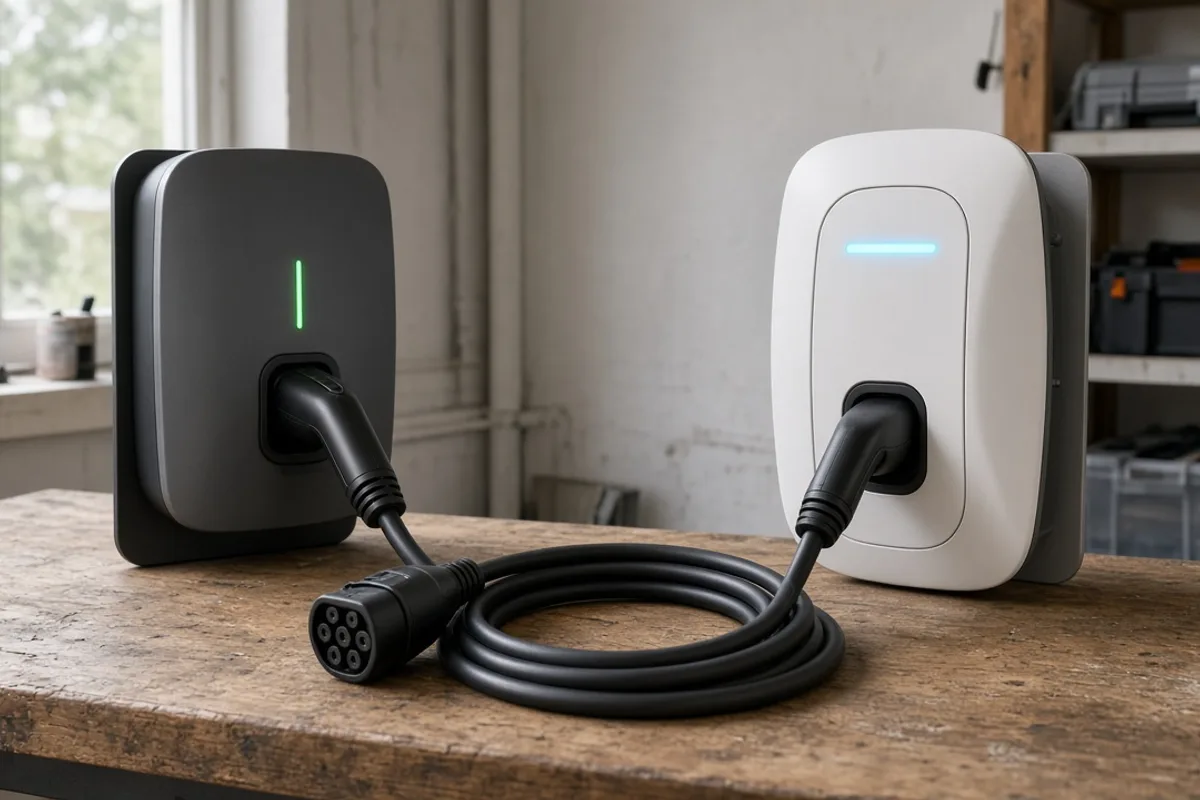
Match charger rate to the car's AC capability
Home wallboxes typically deliver AC charging. The vehicle's onboard charger sets the ceiling. A car limited to roughly 7 kW AC will not charge faster from a 22 kW AC unit. DC rapid rates seen at motorway hubs are a different technology path.
Check your handbook or manufacturer app for maximum AC charge rate on single-phase and three-phase. That figure matters more than marketing labels on the wallbox.
- Confirm onboard AC kW before paying for a higher-rated unit.
- Remember cable and connector limits can also constrain rate.
- Treat DC public charging as a separate use case from home AC.
Why 7 kW fits most overnight routines
A 7 kW session over eight to ten hours can add a large amount of range for typical commuting and school-run patterns. Exact miles depend on vehicle efficiency, weather and driving style, so use your own kWh per mile rather than a generic promise.
If you regularly return home with a very low battery and leave again within one or two hours, higher power can help only when the supply and vehicle support it. Otherwise off-peak scheduling at 7 kW is usually enough.
When 22 kW is worth discussing
Homes or small businesses with existing three-phase supplies, vehicles that accept higher AC rates, and short dwell times may benefit. The survey must confirm spare capacity, protective device design and any DNO notification or connection issues.
Upgrading a domestic single-phase cut-out solely to chase 22 kW AC is often expensive and still useless if the car cannot take the power. Ask for that constraint in writing before authorising supply works.
Survey questions that prevent overbuying
A competent quote states proposed charge rate, assumed vehicle AC limit, supply type, and whether load management will throttle the unit when the house is busy. Vague promises of 22 kW on an unchecked single-phase board are a red flag.
Compare total installed cost against minutes saved in your real timetable. Technology should serve the calendar, not the other way round.
- Request the assumed maximum AC rate for your exact model.
- Ask whether three-phase works are included or excluded.
- Price a 7 kW scope as the baseline alternative.
Frequently asked questions
Can I install a 22 kW charger on a normal UK house supply?
Most houses are single-phase and cannot deliver a full 22 kW AC charge. Higher rates usually need three-phase capacity and a compatible vehicle.
Is 7 kW too slow for a large battery EV?
Not for overnight charging in many households. Short daytime top-ups are the scenario where higher rates matter more, and only if the car and supply support them.
Does a higher kW charger use more electricity overall?
It delivers energy faster, but the kWh added for a given journey is similar. Standing losses and tariff timing have more effect on cost than the wallbox rating alone.
Should I buy 22 kW to future-proof?
Future-proof the cable route and board space if useful, but paying for unused charge rate is poor value when your car and supply are limited.
Core buying guides
Start with these high-intent guides, then dig into the rest of the library.
Related guides
Sources and further reading
How this guide was prepared
This guide was written by the Local EV Installers Editorial Team. We compare official guidance, legislation and established consumer information, separate general information from project-specific advice, and show publication dates and sources. We do not accept installer accreditation claims at face value.