
A typical UK 7kW home EV charger installation often budgets around £800 to £1,400 including VAT where the unit mounts beside a driveway or garage and the consumer unit can accept a dedicated circuit without major upgrade. Longer runs, freestanding posts, older boards and constrained city sites cost more. 7kW remains the default domestic rating on single-phase supplies because it balances overnight fill times with household demand. Use survey-based written scopes when comparing installers.
Why 7kW is the UK home default
Most British homes have a single-phase supply. A 7kW (often marketed as 7.4kW) AC wallbox sits comfortably within that world for overnight charging of full battery electric cars and many plug-in hybrids. It is fast enough for daily commuting needs when the car sits plugged in for several hours, without the supply upgrades that higher-power AC or DC options can trigger.
Install cost is driven less by the kilowatt label alone and more by how far the circuit must travel, how tidy the consumer unit is, and whether the mounting surface is ready. Two 7kW quotes can differ by several hundred pounds for those reasons alone.
What the £800 to £1,400 band usually covers
In September 2026 budgeting conversations, the £800 to £1,400 including VAT illustration usually assumes a mid-range smart charger, wall mounting, a short dedicated circuit, protective devices, testing and handover. It may include a modest amount of making-good but not a full driveway rebuild.
If the price sits below that band, read the exclusions carefully. If it sits above, ask which extras are included: SWA buried cable, a post, Wi-Fi extenders, load management, scaffold, parking suspensions or board replacement.
- Included in many mid-band quotes: charger, labour, short circuit, certification
- Often extra: post and foundation, long buried cable, consumer unit upgrade
- Regionally variable: London parking, congestion access and multi-visit logistics
Cable length and mounting choices
Every additional metre of protected cable adds material and labour. Surface-clipped runs are usually cheaper than buried SWA under block paving. A freestanding post can solve awkward wall positions but adds a footing and sometimes a longer underground feed.
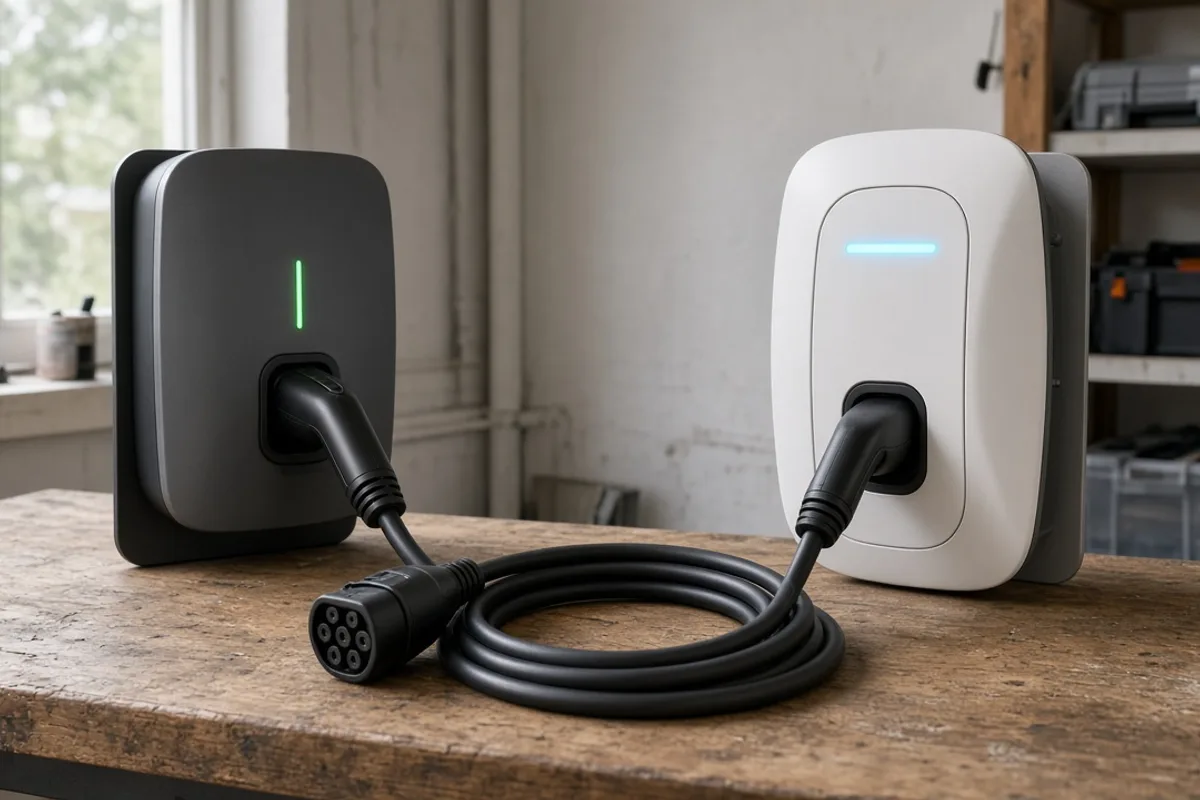
Tethered units with a fixed cable can feel simpler day to day, while untethered sockets keep the wall neater if you already carry a Type 2 lead. Neither choice automatically dominates cost, but tethered models can be slightly dearer at hardware level.
Electrical readiness checklist
Ask the installer to confirm spare ways in the consumer unit, the main fuse rating, earthing arrangement and whether open-PEN protection or equivalent measures are needed for your supply type. Those technical checks protect you and explain sudden quote changes after survey.
If a board upgrade is recommended, get it itemised. Sometimes a partial alteration is enough. Sometimes a full replacement is safer and cleaner. Comparing written scopes side by side makes that distinction obvious.
Net cost after support
Eligible renters, flat owners, landlords or on-street households may offset part of a 7kW install through OZEV schemes, historically remembered via EVHS at around £350 and later published at higher caps for some routes. Owner-occupier houses with private driveways are frequently outside those household grants. Confirm live GOV.UK eligibility before you reduce your budget spreadsheet.
Frequently asked questions
Is 7kW enough for a long-range EV?
For most homes that charge overnight, yes. A rough rule is that 7kW can add tens of miles per hour of charging depending on the car and battery size. If you regularly need rapid top-ups at home during short stops, discuss vehicle limits and supply capacity with the installer.
Will a 7kW charger work on any UK house?
Most single-phase homes can support 7kW if the consumer unit and main fuse allow a dedicated circuit. Very constrained supplies, multiple large loads, or unusual earthing may need load management or other works first.
How long does a straightforward 7kW install take?
Many driveway jobs complete in a day once materials and access are ready. Board upgrades, buried cable or permissions can extend that to additional visits.
Do I need a smart 7kW charger?
UK rules have pushed domestic chargepoints toward smart functionality for energy system reasons. Check current requirements and any grant eligibility lists, which usually specify approved smart models.
Core buying guides
Start with these high-intent guides, then dig into the rest of the library.
Related guides
Sources and further reading
How this guide was prepared
This guide was written by the Local EV Installers Editorial Team. We compare official guidance, legislation and established consumer information, separate general information from project-specific advice, and show publication dates and sources. We do not accept installer accreditation claims at face value.