
A CT clamp measures how much current the house is using so a smart charger can avoid blowing the main fuse or can follow solar export. It clips around the correct conductor, in the correct orientation, at the incoming supply or wherever the manufacturer specifies. If it is on the wrong tail, the wrong way round, or downstream of the wrong loads, the charger either thinks the house is exporting when it is importing, or it limits itself for no reason.
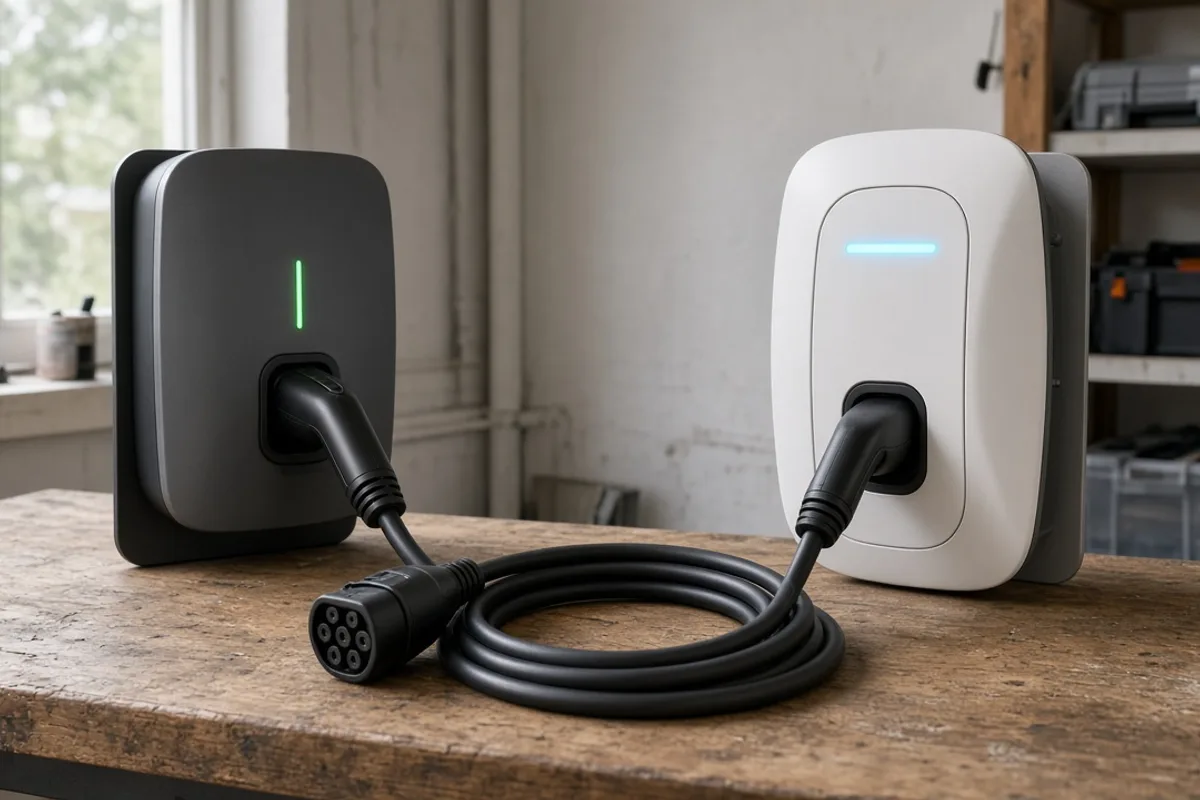
Point at cT clamp direction on a smart EV charger in the pack
Handover should include a test: turn a kettle on and show that the charger responds if load management was part of the sale. Record the clamp location in the pack.
CT clamp direction on a smart EV charger
Symptoms are a charger that crawls at a few amps, a solar mode that charges at night, or a unit that trips the supply when the oven and the car run together even though 'load balancing' was sold to you. The fix is usually the clamp, the phase, or the configuration, not a new car.
- The clamp must be on the right conductor
- Direction is not optional
- Solar modes depend on it
- A kettle test is a fair handover check
CT clamp direction on a smart EV charger: questions for the first visit
Ask the installer to show you the clamp location with the meter cupboard open. There should be one clamp in the right place, not a spare dangling on a data cable.
How cT clamp direction on a smart EV charger moves the job
Correcting a clamp is usually a short return visit if the cable was left long enough. It becomes a repeat visit with containment opened up if the clamp lead was cut short in the wrong cupboard. That time should be warranty, not a new call-out, if they installed it.
What goes wrong with cT clamp direction on a smart EV charger
The mistake is letting a decorator or a meter fitter move the clamp and clip it back on the nearest cable. Another is buying a solar-matching charger and never fitting the clamp at all.
Frequently asked questions
What if I have three-phase?
The monitoring method may need more than one clamp or a different meter. Say so at survey if you already have three-phase.
Can I move it for a smart meter install?
Ask the charger installer first. Meter fitters do not always put the clamp back correctly.
Does every charger need one?
Plain chargers without load management or solar matching may not. If you paid for those features, the clamp or equivalent meter is part of the job.
Why does the car charge at 1 kW?
A reversed or missing clamp is a common cause. It can also be the tariff schedule or the car's own limit. Check the clamp before you replace the charger.
Core buying guides
Start with these high-intent guides, then dig into the rest of the library.
Related guides
Sources and further reading
How this guide was prepared
This guide was written by the Local EV Installers Editorial Team. We compare official guidance, legislation and established consumer information, separate general information from project-specific advice, and show publication dates and sources. We do not accept installer accreditation claims at face value.