
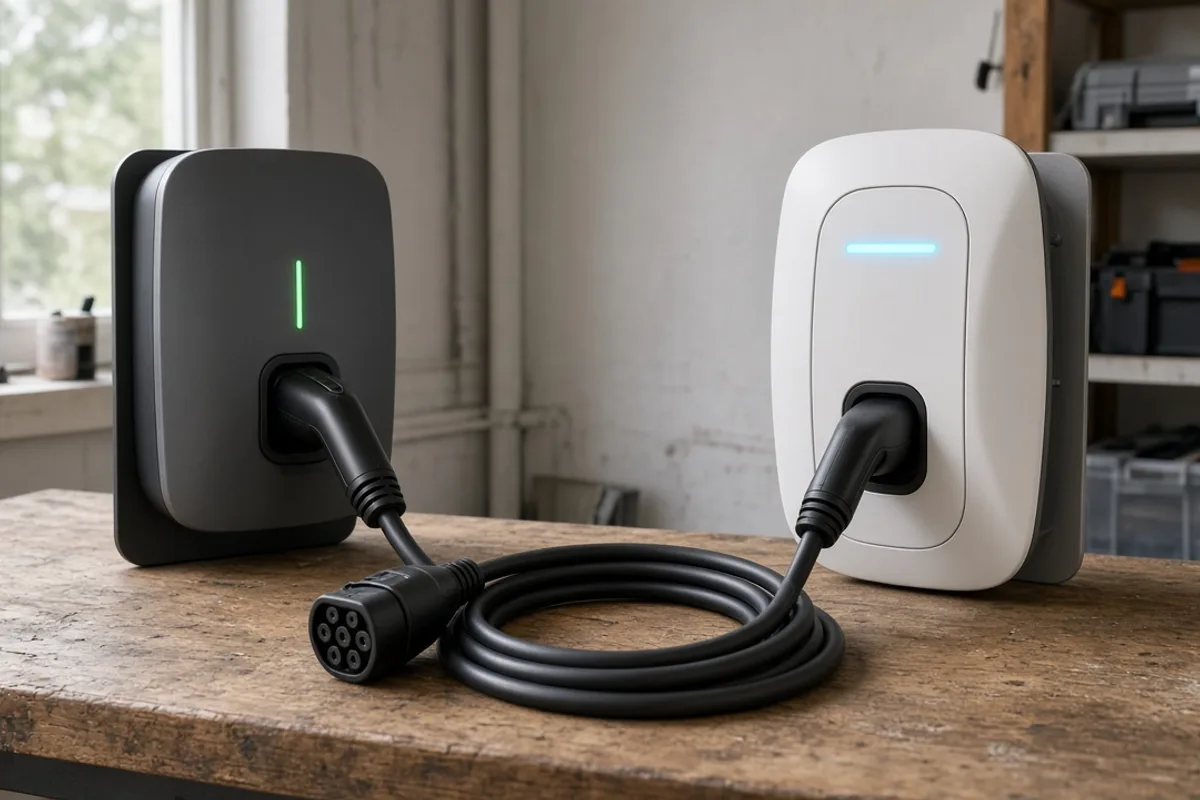
A solar compatible charger watches how much electricity your home is exporting and diverts the surplus into the car instead of sending it to the grid. It needs a sensor, usually a CT clamp, on your incoming supply. The myenergi zappi is the best known, and the Hypervolt Home 3 Pro, Indra Smart Pro and Andersen A3 also offer solar modes.
How solar charging works
Most cars need at least about 1.4kW to start charging. A solar charger waits until surplus generation passes that level, then varies the charge rate as clouds come and go. Some modes top up with grid power to keep charging steady; solar-only modes pause when the sun drops.
Is it worth it?
It depends on when the car is at home. Solar charging works best if the car is parked during the day, for example for home workers or retired drivers. If the car is out all day, a cheap overnight tariff usually saves more than solar diversion.
- Check where the CT clamp will go and how its signal reaches the charger
- Winter generation is low, so plan on grid charging for much of the year
- If you export on a good rate, compare that value with the grid price you would otherwise pay
Frequently asked questions
Can any charger charge from solar panels?
Any charger will use solar power that happens to be available, but only solar-compatible chargers can adjust their rate to follow surplus generation automatically.
Core buying guides
Start with these high-intent guides, then dig into the rest of the library.
Related guides
Sources and further reading
How this guide was prepared
This guide was written by the Local EV Installers Editorial Team. We compare official guidance, legislation and established consumer information, separate general information from project-specific advice, and show publication dates and sources. We do not accept installer accreditation claims at face value.