
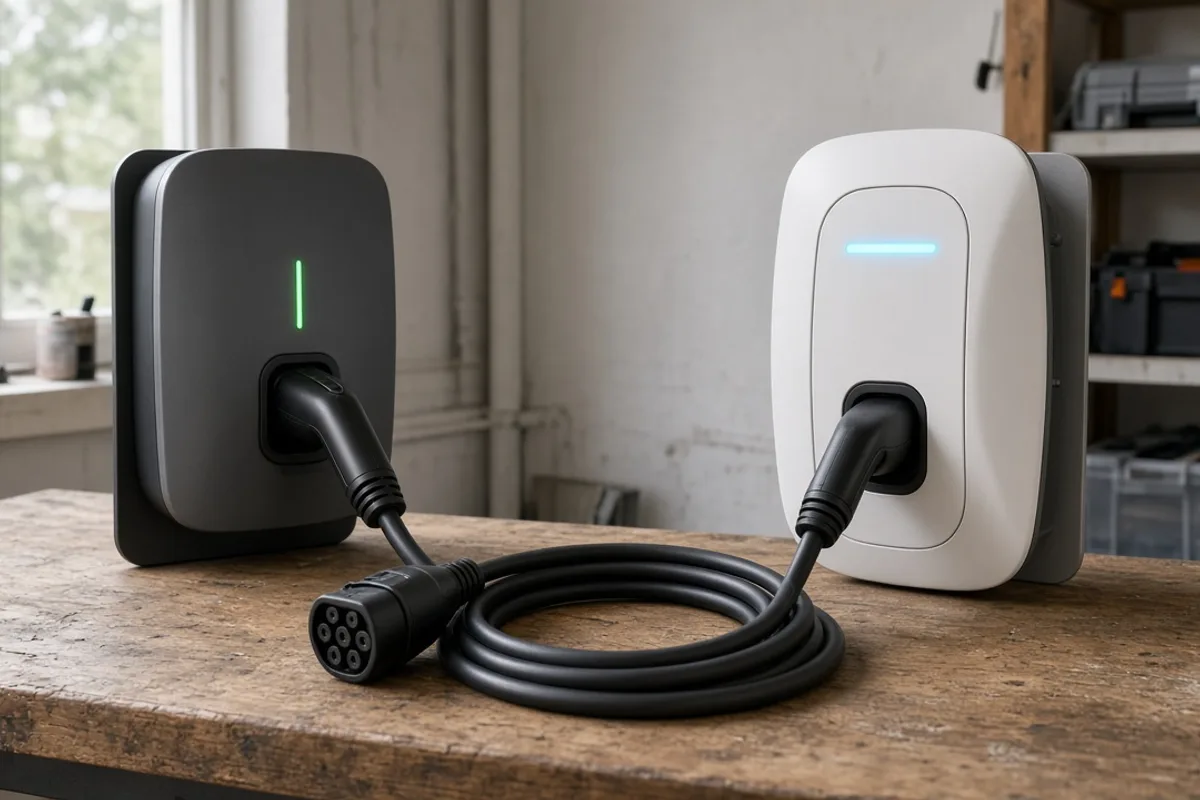
Ohme, Pod Point and Wallbox each offer UK-ready smart home chargers, but the best choice depends on tariff integrations, app habits, tethered versus untethered preference, installer familiarity and warranty support near you. Headline kW ratings are often similar at around 7kW on single-phase homes; differences show up in scheduling intelligence, solar modes, cable options and aftercare. Compare survey-backed install scopes that name a specific model, not brand vibes alone. Grant eligibility, where relevant, still depends on approved lists and live GOV.UK rules rather than marketing pages.
What actually differs day to day
All three brands sit in the mainstream smart wallbox category used across UK driveways. Drivers notice app clarity, how reliably off-peak schedules hold, whether the cable length fits the bay, and how quickly support answers when Wi-Fi drops.
Installation quality and protective devices matter more to safety than the logo on the fascia.
Smart tariffs and solar behaviour
Some products lean hard into automatic tariff alignment with major UK suppliers. Others emphasise solar diversion or solar-plus modes when paired with generation. Match the charger to the energy setup you already have or firmly plan within a year.
If you change supplier often, ask how painful re-pairing schedules will be.
- Confirm tethered cable lengths available
- Check offline behaviour if broadband fails
- Ask the installer which brand they commission weekly
Hardware and mounting practicalities
Fascia size, cable holsters, IP rating and post compatibility affect neatness on tight terraces and garage side walls. Untethered sockets keep walls cleaner if you already carry a Type 2 lead.
Future second-car households may care about load balancing accessories more than colour finishes.
Warranty, spares and installer ecosystem
A brilliant app with scarce local engineers is a poor trade. Prefer brands your shortlisted installers stock, warrant and can replace quickly.
Read whether labour is included in warranty visits or only parts.
Grants and buying tips
If you need an OZEV claim, the unit must sit on the relevant approved list for your scheme. Check GOV.UK and installer guidance rather than assuming every smart charger qualifies.
Choose the model on the written quote after survey, then stop browsing forums for an extra 2% feature you will never use.
Frequently asked questions
Which brand charges fastest at home?
On a typical single-phase UK supply, around 7kW is the common limit regardless of brand. The car's onboard charger also caps speed.
Should I buy the charger myself?
Only if the installer will still warrant the full install and the model meets any grant list you need. Bundled supply is often simpler.
Do I need solar compatibility?
Only if you have or will soon add solar. Otherwise prioritise tariff scheduling and reliable support.
Is one brand always best for grants?
No. Eligibility follows scheme approved lists and authorised installers. Verify on GOV.UK for your route.
Core buying guides
Start with these high-intent guides, then dig into the rest of the library.
Related guides
Sources and further reading
How this guide was prepared
This guide was written by the Local EV Installers Editorial Team. We compare official guidance, legislation and established consumer information, separate general information from project-specific advice, and show publication dates and sources. We do not accept installer accreditation claims at face value.