
Choose Ohme if you mainly want cheap overnight charging on a smart tariff with minimal fuss. Choose myenergi zappi if you have solar panels and want to charge from surplus generation, or if you need a three-phase or untethered option with solar modes. Both have built-in open-PEN protection on current models and both are widely listed as Intelligent Octopus Go compatible.
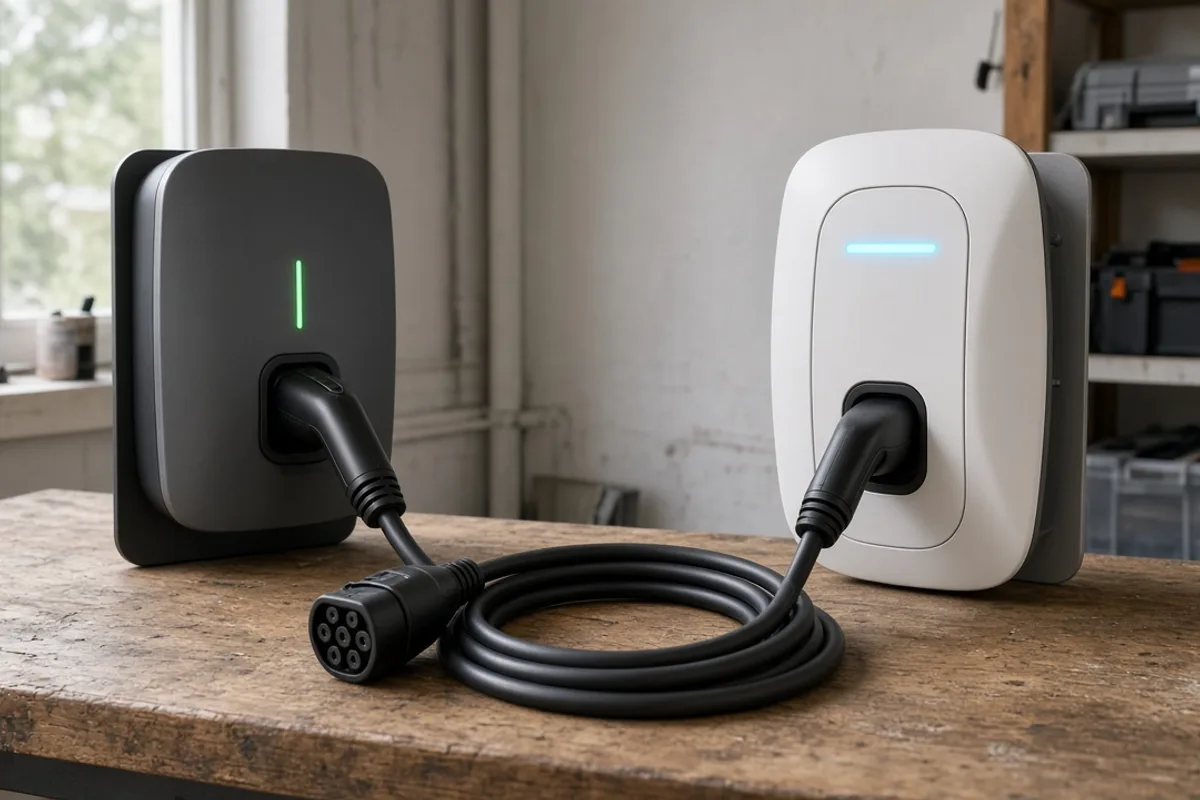
Ohme and zappi side by side
The two brands solve different problems, which is why the choice is usually easy once you know whether solar matters to you.
| Ohme Home Pro / ePod | myenergi zappi | |
|---|---|---|
| Main strength | Smart tariff integration | Solar surplus charging |
| Power | 7.4kW single-phase | 7.4kW single-phase or 22kW three-phase |
| Cable | Home Pro tethered 5m (8m option); ePod untethered | Tethered or untethered |
| Open-PEN protection | Built in | Built in on v2.1 and later |
| Solar charging | Not its focus | Fast, Eco and Eco+ modes using a CT clamp |
| Screen | Home Pro yes, ePod no | Yes |
| Intelligent Octopus Go | Widely listed as compatible | Widely listed as compatible (via myenergi hub) |
When Ohme makes more sense
Ohme's software is built around tariffs. It reads your tariff's cheap periods and charges the car to a target by a set time. For a home without solar, this is the main thing a smart charger does, and Ohme does it with little setup. The ePod gives the same software in an untethered unit without a screen.
When zappi makes more sense
The zappi's Eco+ mode charges only from surplus solar, and Eco mode blends surplus with grid power. That needs a CT clamp on the incoming supply, and in some homes a myenergi hub for app control. If you have solar panels, the zappi can soak up energy you would otherwise export cheaply.
Frequently asked questions
Is Ohme or zappi better for Octopus?
Both are widely listed as Intelligent Octopus Go compatible. Ohme is often described as having the most direct integration; zappi works through the myenergi hub. Check Octopus's compatibility tool for your exact model.
Do Ohme and zappi need an earth rod?
Current models of both have built-in open-PEN protection, so an earth rod is not normally needed on a PME supply. Your installer still checks the earthing on the survey.
Core buying guides
Start with these high-intent guides, then dig into the rest of the library.
Related guides
Sources and further reading
How this guide was prepared
This guide was written by the Local EV Installers Editorial Team. We compare official guidance, legislation and established consumer information, separate general information from project-specific advice, and show publication dates and sources. We do not accept installer accreditation claims at face value.