
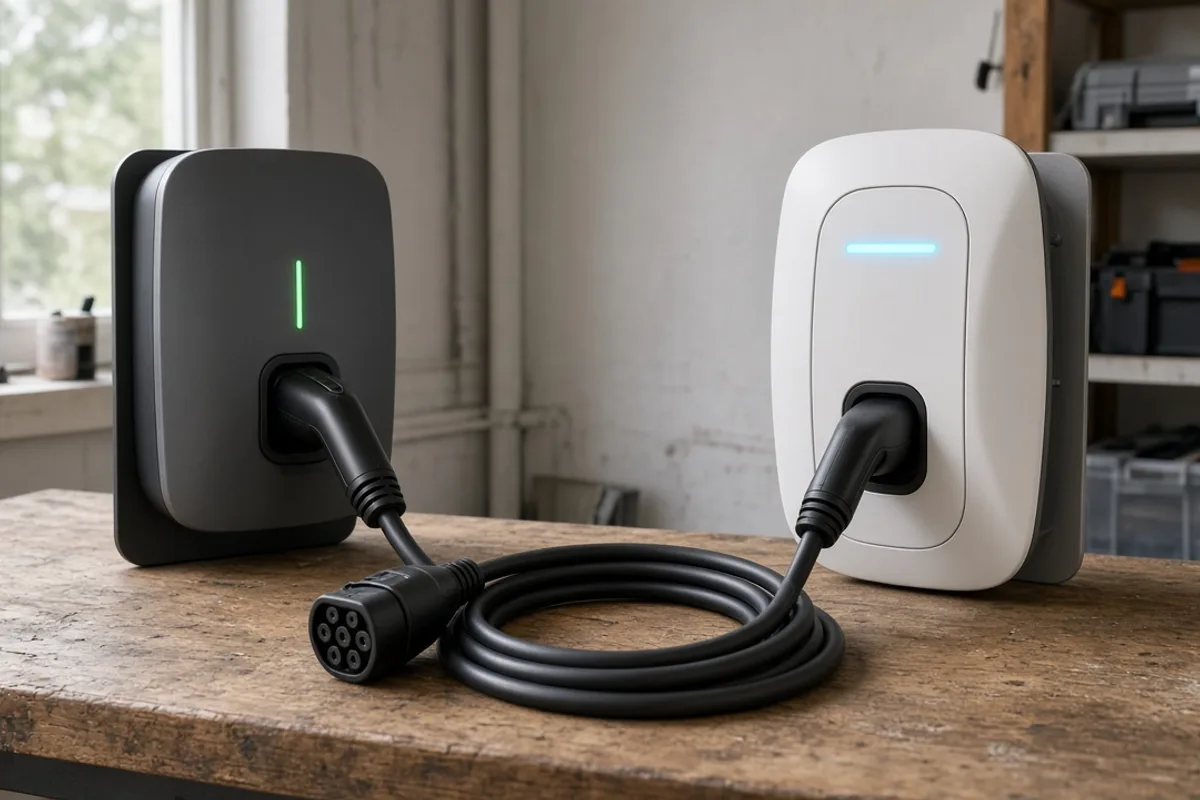
For most UK households the best home charger is a 7kW single-phase unit with built-in open-PEN protection, app scheduling and support for your chosen off-peak tariff. Ohme, Hypervolt, myenergi zappi, Indra, Andersen, Pod Point and EO all make credible options; the right one depends on whether you want solar diversion, a tethered or untethered cable, premium looks or the lowest fitted price.
How the main chargers compare
Prices and features change, so treat this as a starting shortlist and confirm details with the manufacturer or installer before you buy.
| Charger | Cable | Open-PEN built in | Solar mode | Best for |
|---|---|---|---|---|
| Ohme Home Pro | Tethered, 5m (8m option) | Yes | Limited | Smart tariffs, simple setup |
| Ohme ePod | Untethered socket | Yes | Limited | Same smarts, neater wall, no screen |
| myenergi zappi | Tethered or untethered | Yes (v2.1 onwards) | Yes, Eco and Eco+ | Homes with solar panels |
| Hypervolt Home 3 Pro | Tethered, 5m | Yes | Yes, with energy monitor | All-rounder with solar option |
| Indra Smart Pro | Tethered | Yes | Yes | Value smart charger with solar |
| Andersen A2 or A3 | Tethered, stored on the unit | Check model | Yes on A3 with CT clamp | Design-led homes |
| Pod Point Solo 3S | Tethered or universal socket | Yes | Works alongside solar | Supplied and fitted by one company |
| EO Mini Pro 3 | Untethered socket | Yes | Via app on some versions | Small walls and tight spaces |
| Tesla Wall Connector | Tethered, long cable | No, add a device or earth rod | No | Tesla owners who want the matching unit |
What actually matters when choosing
Open-PEN protection is the feature that most affects the fitted price. Nearly all UK homes have a PME earth, and BS 7671 requires the charger circuit to be protected against a broken PEN conductor. A charger with this built in avoids an earth rod or a separate protection device.
Next, decide between tethered and untethered. A tethered cable is quicker to use every day; an untethered socket looks neater and lets you use any cable length. Then check the charger is supported by the smart tariff you want, because some tariffs control charging through the charger and others through the car.
- 7kW single-phase suits almost every home; 22kW needs three-phase and a car that can use it
- Solar diversion is only worth paying for if you have, or will add, solar panels
- Warranty length and how call-outs are handled matter more than small spec differences
Cheapest is not always cheapest fitted
A low headline price can hide extras: an earth rod, a separate PEN device, a longer cable run or a consumer unit upgrade. Compare fitted quotes for the same position and route, not hardware prices.
Frequently asked questions
What is the best EV charger for Intelligent Octopus Go?
Ohme, myenergi zappi, Hypervolt Home 3 Pro, Indra Smart Pro and Andersen chargers are widely listed as compatible. Octopus also supports many cars directly. Check Octopus's own compatibility tool before buying, as the list changes.
Do I need a 22kW home charger?
Almost certainly not. 22kW needs a three-phase supply, which few UK homes have, and many cars cannot accept more than 7kW or 11kW on AC.
Core buying guides
Start with these high-intent guides, then dig into the rest of the library.
Related guides
Sources and further reading
How this guide was prepared
This guide was written by the Local EV Installers Editorial Team. We compare official guidance, legislation and established consumer information, separate general information from project-specific advice, and show publication dates and sources. We do not accept installer accreditation claims at face value.