
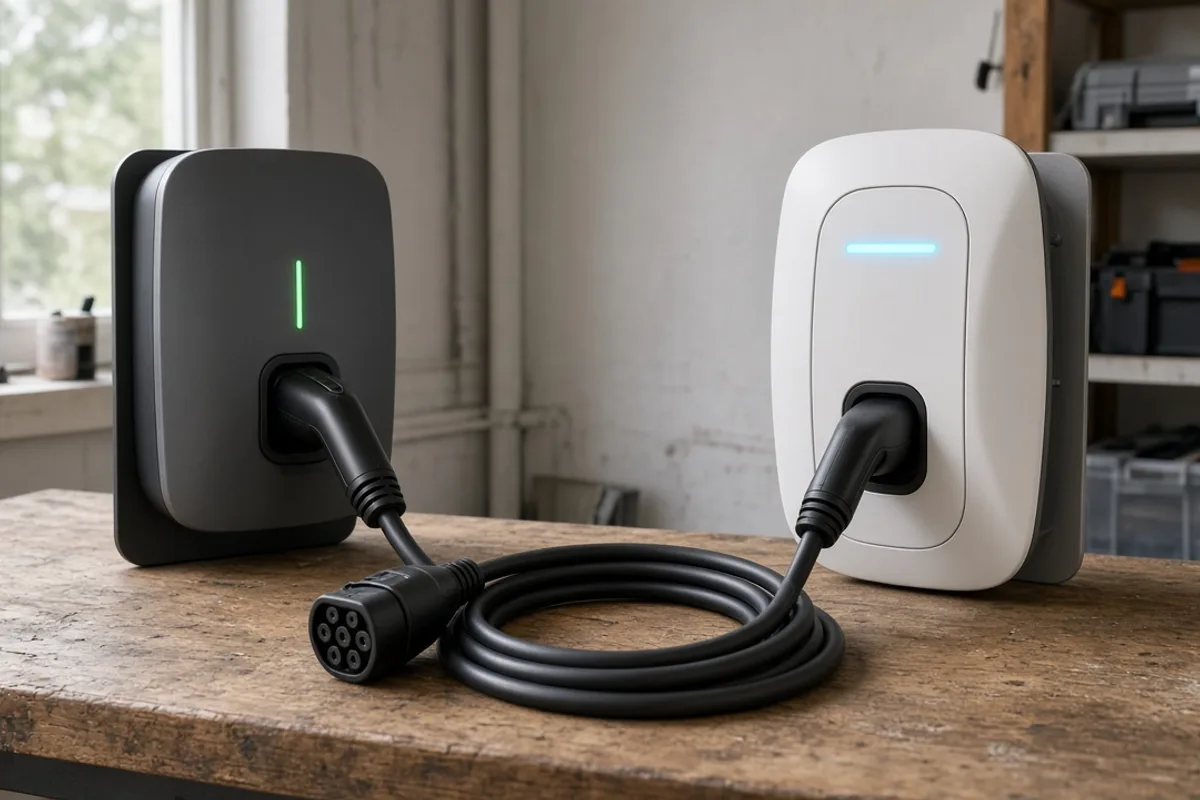
The myenergi zappi is the best-known UK charger for charging from solar. Its Eco+ mode uses only surplus solar, Eco blends surplus with grid power, and Fast charges at full rate. It needs a CT clamp on your incoming supply to see when you are exporting. Current versions include open-PEN protection, and myenergi has simplified the range so 22kW units can be set to 7kW.
The three charging modes
The modes are what make the zappi different from a standard smart charger.
- Fast: charges at the maximum rate from any source
- Eco: tops up surplus solar with grid power to keep a minimum charge rate
- Eco+: charges only from surplus solar and pauses when there is not enough
What installation involves
As well as the charger and its circuit, the installer fits a CT clamp around the incoming supply cable so the zappi can measure import and export. If your meter is far from the charger, ask how the clamp signal will reach it, as some installs use a wireless sensor or hub. Linking the zappi to the myenergi app usually needs the myenergi hub.
The zappi is weatherproof to IP65 and supports OCPP, which matters if an employer or energy company will manage it.
Tethered, untethered and the eddi
Tethered zappis have the cable attached; untethered versions use your car's cable. If you also want surplus solar to heat hot water, myenergi's eddi diverter works alongside the zappi in the same app.
Frequently asked questions
Is a zappi worth it without solar panels?
It still works as a smart charger, but you pay for solar features you will not use. Without solar, a tariff-focused charger such as Ohme or Indra is often better value.
Does the zappi need an earth rod?
Version 2.1 and later include protection against a broken PEN conductor, so an earth rod is not normally needed on a PME supply.
Core buying guides
Start with these high-intent guides, then dig into the rest of the library.
Related guides
Sources and further reading
How this guide was prepared
This guide was written by the Local EV Installers Editorial Team. We compare official guidance, legislation and established consumer information, separate general information from project-specific advice, and show publication dates and sources. We do not accept installer accreditation claims at face value.