
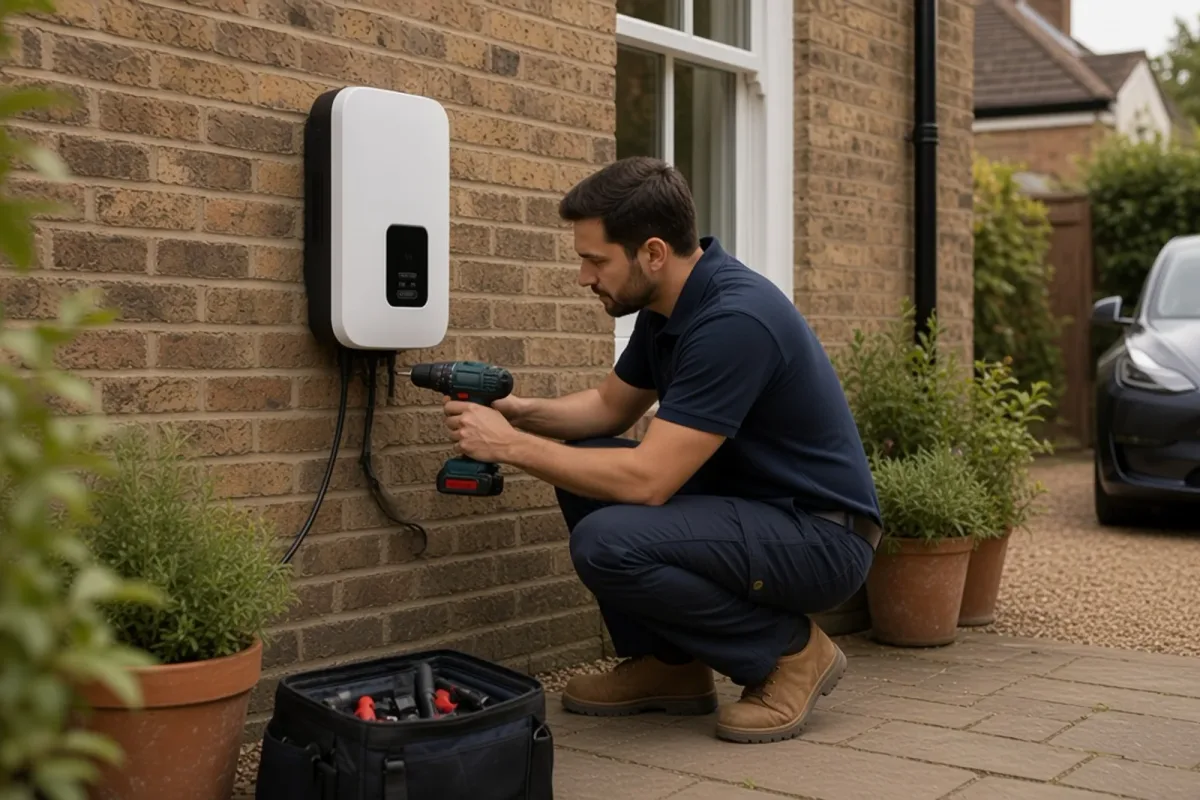
The best home charger is the one that fits your tariff, your car and your drive. Start with smart tariff compatibility, because that drives running costs. Then decide tethered or untethered, check for built-in open-PEN protection, confirm the Wi-Fi or data connection will reach, and look for at least a three year warranty. Popular UK choices include models from Ohme, myenergi, Hypervolt, Andersen, Pod Point, Wallbox, easee, Indra and Tesla.
Features that matter most
All UK home chargers sold for installation must meet the smart charge point regulations, so basic scheduling is standard. The differences that matter are below.
- Smart tariff integration, if your supplier controls charging
- Solar charging modes, if you have panels and want to use surplus
- Tethered for convenience or untethered for a tidy wall and any cable
- Built-in open-PEN protection, which avoids an earth rod in many homes
- Load management support for the main fuse
- A reliable connection: Wi-Fi reach, Ethernet or mobile data
- Warranty length and UK support
Popular UK home chargers
These brands appear most often on UK installer quotes. Specifications change with new versions, so check the current model with your installer.
| Brand | Known for | Worth checking |
|---|---|---|
| Ohme | Smart tariff integration, tethered models | Which tariffs control it directly |
| myenergi zappi | Solar surplus charging modes | Winter behaviour in eco modes |
| Hypervolt | Compact design, app features | Solar and tariff options on your version |
| Andersen | Design-led finishes | Price against features |
| Pod Point | Widely installed, simple app | Tariff integrations |
| Wallbox | Small units, range of power options | Open-PEN protection on your model |
| easee | Load sharing across several units | UK support arrangements |
| Indra | Solar and smart tariff features | Version-specific features |
| Tesla Wall Connector | Simple, for Tesla and other cars | Usually needs a separate open-PEN device in UK homes |
Choosing by situation
If you are on a smart EV tariff, choose a charger your supplier can control, or rely on the car's own integration if the tariff supports it. If you have solar, a charger with surplus solar modes lets you use more of your own generation in summer.
On a narrow drive or where the cable crosses a path, untethered keeps the wall tidy. Where convenience matters most, tethered saves handling a cable every day.
Price and installation
Charger prices differ less than installation costs. A standard installation on a short wall run is the main cost; long cable runs, consumer unit upgrades and groundwork move the total more than the brand.
Get quotes from installers who fit more than one brand and ask why they recommend a specific model. Use the installation cost calculator on this site to sense-check the total.
Frequently asked questions
What is the best home EV charger in the UK?
There is no single best. Choose by tariff integration, solar needs, tethered or untethered, open-PEN protection, connectivity and warranty.
Do all home chargers work with all cars?
Type 2 chargers work with almost every EV sold in the UK. Smart tariff integration varies by charger and car.
Is a tethered or untethered charger better?
Tethered is more convenient day to day. Untethered looks tidier and works with any cable length.
Do I need a charger with solar mode?
Only if you have solar panels and want to charge from surplus generation. Otherwise a smart tariff saves more.
Core buying guides
Start with these high-intent guides, then dig into the rest of the library.
Related guides
Sources and further reading
How this guide was prepared
This guide was written by the Local EV Installers Editorial Team. We compare official guidance, legislation and established consumer information, separate general information from project-specific advice, and show publication dates and sources. We do not accept installer accreditation claims at face value.