
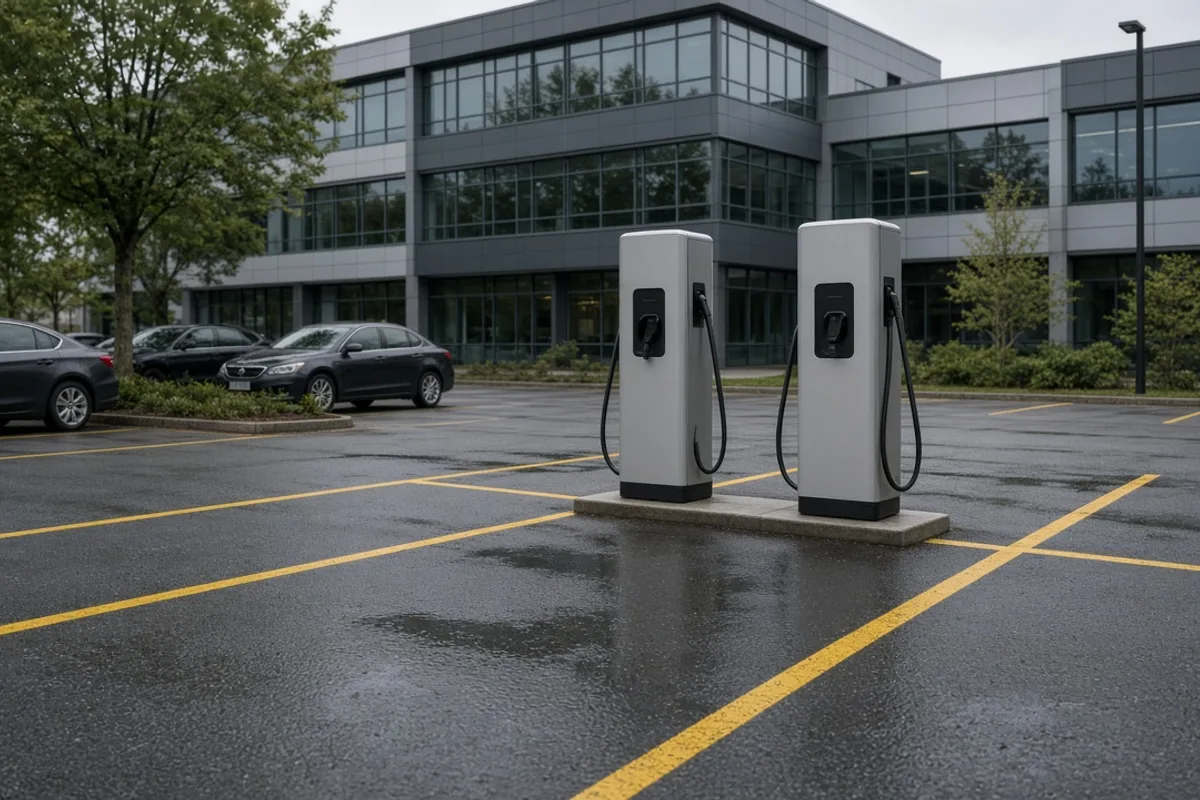
Workplace chargers are chosen less on brand and more on how they will be managed: socketed or tethered bays, load management across several points, access control, payment and an OCPP back office that lets you change provider later. Commercial ranges from ABB, Alfen, KEBA, Wallbox, Rolec, Schneider and others all cover these needs; the site's supply and parking layout usually decide the design.
Socketed or tethered bays
Socketed chargers are common in shared car parks because there is no cable to damage and drivers use their own. Tethered chargers suit staff bays and fleets where convenience matters and the same vehicles use them every day.
Features that matter on a shared site
These decide how well the system works over its life.
- Load management so several chargers share the available supply
- OCPP support so you can switch back-office provider later
- RFID or app access control and, if needed, payment
- Wall-mounted or pedestal units to suit the bay layout
- Weather and impact resistance for exposed car parks
Grants and planning
Eligible businesses can apply for OZEV workplace support through an authorised installer. Check current eligibility on GOV.UK before budgeting, and allow for ducting and civil works, which often cost more than the chargers on a multi-bay site.
Frequently asked questions
What is OCPP and why does it matter?
OCPP is an open protocol that lets chargers talk to management software. Choosing OCPP-compatible chargers means you are not locked into one provider for billing and monitoring.
Core buying guides
Start with these high-intent guides, then dig into the rest of the library.
Related guides
Sources and further reading
How this guide was prepared
This guide was written by the Local EV Installers Editorial Team. We compare official guidance, legislation and established consumer information, separate general information from project-specific advice, and show publication dates and sources. We do not accept installer accreditation claims at face value.