
Staff cars dwell for a shift. Visitors dwell for an hour. A 7 kW charger is generous for a worker and a slow top-up for a visitor who expected a rapid. Mixing them on one row makes both groups angry. If you offer visitor charging, say the rate and the time limit, and expect those bays to be full of finished cars unless you enforce the limit. If you only meant a staff perk, lock it to staff and do not put it on Google Maps.
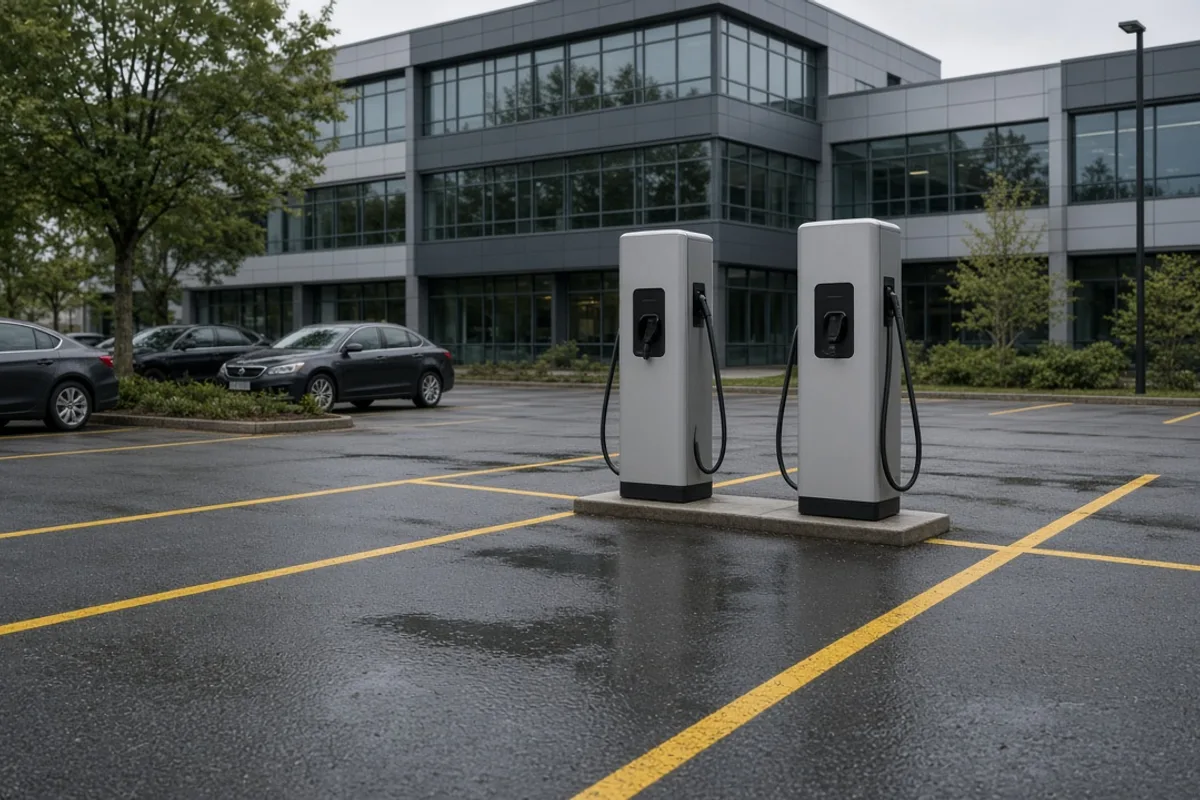
What a survey must prove about visitor charging versus staff charging
Signage and a payment or access method are part of the install, not a later extra.
Visitor charging versus staff charging and the written scope
A workplace grant spent on a bay you then open to the public can breach the scheme. Keep the uses apart.
The expensive shortcut on visitor charging versus staff charging
The mistake is one tariff-free post 'for everyone' beside the front door.
Handover when visitor charging versus staff charging is the issue
Write the user group, the dwell and the enforcement method into the specification.
Visitor charging versus staff charging
Electrical capacity follows the overlap. Visitors at 9am plus staff who have not unplugged is the peak you should design for, or prevent with rules.
- Dwell time picks the kilowatts
- Enforcement is part of the design
- Do not map staff bays as public
- Grants follow the user group
Frequently asked questions
Is a rapid charger the visitor answer?
Only if you can supply it, maintain it and accept the bay economics. Many sites should simply not offer visitor charging.
Can staff use visitor bays after 6pm?
Yes if the policy says so and the grant rules, if any, allow it.
What time limit works?
Match it to the real visit. A fake two-hour limit nobody enforces is decoration.
Do we need ANPR?
Only on larger sites. A small site needs a human rule more than a camera.
Core buying guides
Start with these high-intent guides, then dig into the rest of the library.
Related guides
Sources and further reading
How this guide was prepared
This guide was written by the Local EV Installers Editorial Team. We compare official guidance, legislation and established consumer information, separate general information from project-specific advice, and show publication dates and sources. We do not accept installer accreditation claims at face value.