
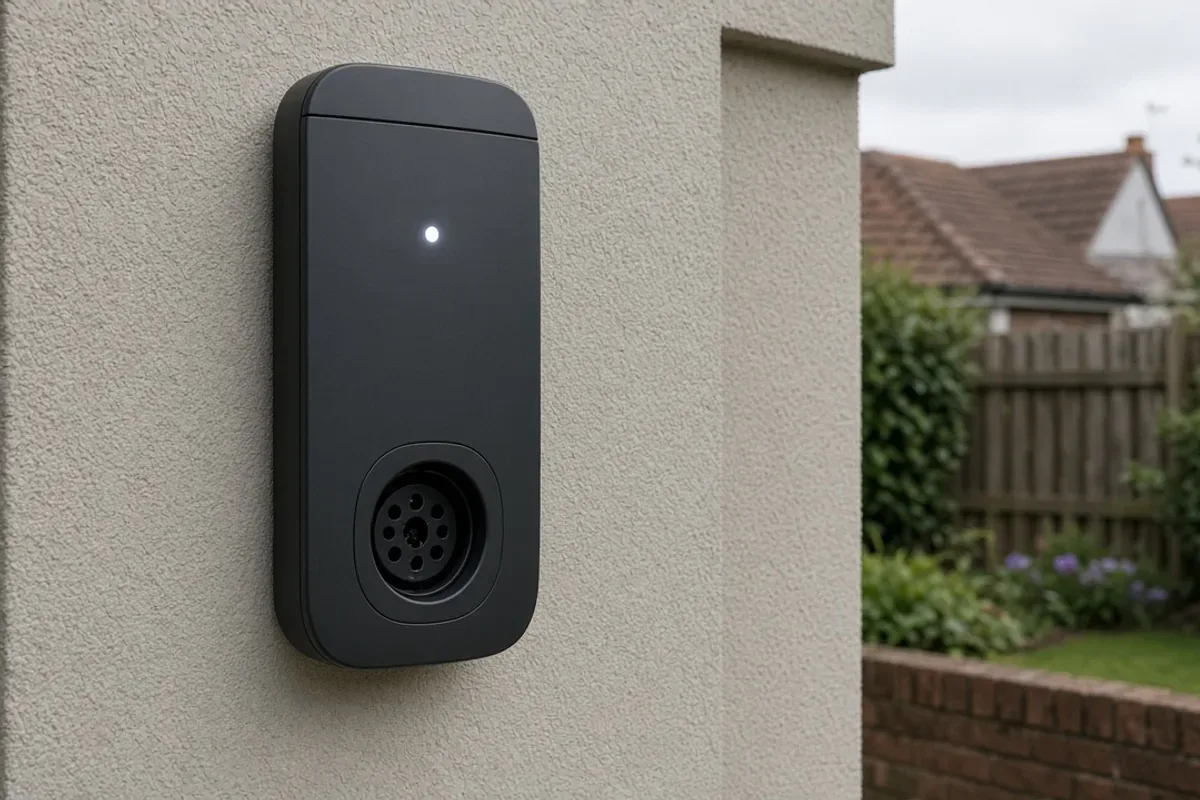
On-street charging is usually a council or chargepoint-operator project on the public highway. A home chargepoint grant is a claim about a private parking place and a private electrical installation. They are not substitutes. You cannot use a homeowner form to have a personal wallbox bolted to a lamp post, and a council tender does not install a charger on your driveway.
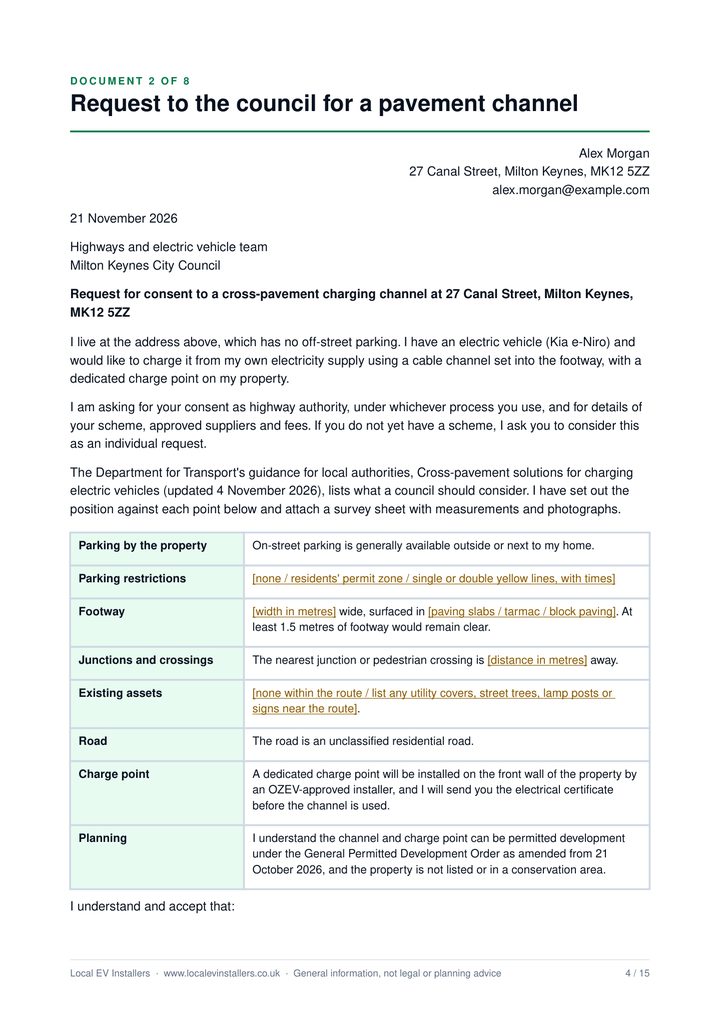
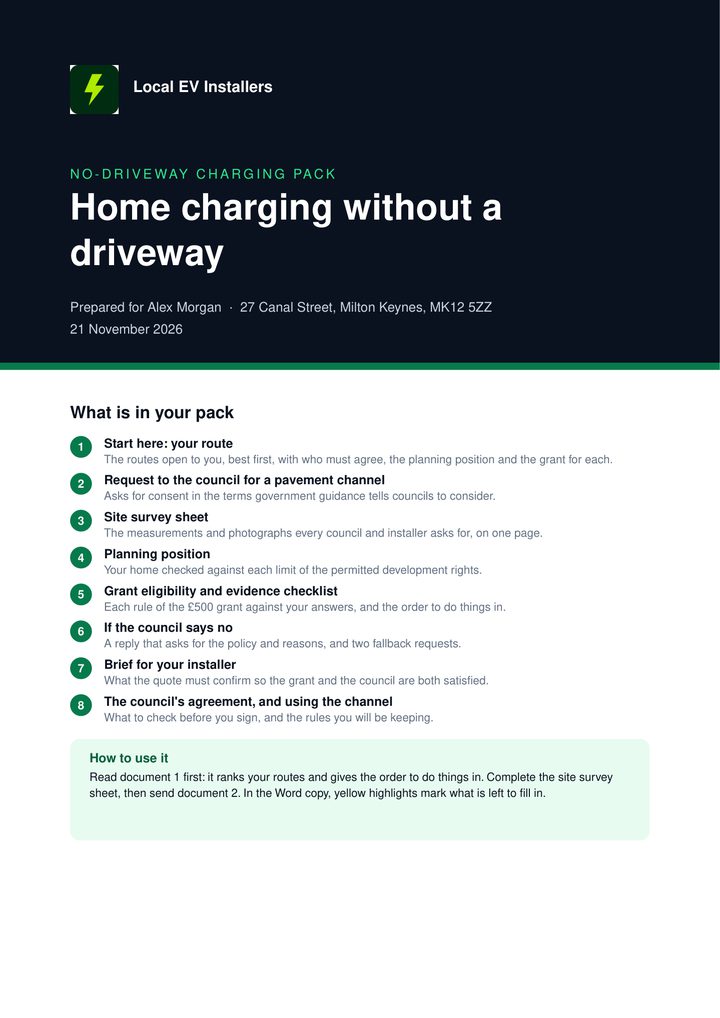
No driveway? The paperwork pack, £19
Your council request, written for you.
Answer a few questions about your home and get up to ten documents written from your answers: the request to your council for a pavement channel, a site survey sheet, the planning and grant checklists, and letters for a landlord or freeholder.
- PDF and editable Word file, emailed in minutes
- Covers the £500 grant and the October 2026 planning change
- Put right or refunded within 14 days
Handover when on-street charging schemes versus home grants is the issue
Ask any adviser to name which pot they mean, in one sentence, before you pay.
Budget route comparison
Grant paperwork changes cashflow; it does not change physics.
| Money lens | On-street charging schemes | home grants |
|---|---|---|
| Upfront cash | Lower if eligibility holds | Full retail until reclaim (if any) |
| Paperwork load | Approved list + authorised installer | Ordinary retail invoice |
| Model choice freedom | Constrained by live lists | Any competent install |
| Timeline risk | Claim steps can delay | Book and fit |
| Net cost once settled | Often lower | Higher unless other offers apply |
| Best for | Eligible homes / flats schemes | Ineligible sites or urgent fits |
On-street charging schemes versus home grants
If your car lives on the street, look at what your council actually offers, or at workplace charging. If you have a private bay, look at home install rules and any grant that matches your tenure.
- Highway kit is a council or operator scheme
- Home grants need a private bay
- Cables to the kerb need consent
- Do not mix the forms
What a survey must prove about on-street charging schemes versus home grants
Search the council pages for on-street programmes and GOV.UK for chargepoint grants. Keep the two PDFs apart.
On-street charging schemes versus home grants and the written scope
Paying a private installer to run a cable to the kerb without highways consent wastes the fee and can be unlawful. A home grant will not refund that.
The expensive shortcut on on-street charging schemes versus home grants
The mistake is a cross-pavement trench started because a national grant exists for 'charging' in the abstract.
Frequently asked questions
Can I suggest a lamp-post site?
You can ask the council. You cannot commission it as a household job.
Do home grants cover gulleys in the pavement?
Only if a current scheme says so and the highway authority agrees. Many do not.
Who owns an on-street unit?
Typically the council or its contractor, not the resident who requested the street.
Can a resident veto a bay?
That is a highways and consultation question, not an electrical one.
Core buying guides
Start with these high-intent guides, then dig into the rest of the library.
Related guides
- Cross-pavement EV charging in the UK: gullies, channels and cables
- EV charger grant 2026: who can still get one before March 2027
- How to claim the OZEV grant for flats and renters
- EV charger grants in Scotland, Wales and Northern Ireland: what is different in 2026
- Workplace Charging Scheme at home: can a home business claim for a driveway charger?
Sources and further reading
How this guide was prepared
This guide was written by the Local EV Installers Editorial Team. We compare official guidance, legislation and established consumer information, separate general information from project-specific advice, and show publication dates and sources. We do not accept installer accreditation claims at face value.