
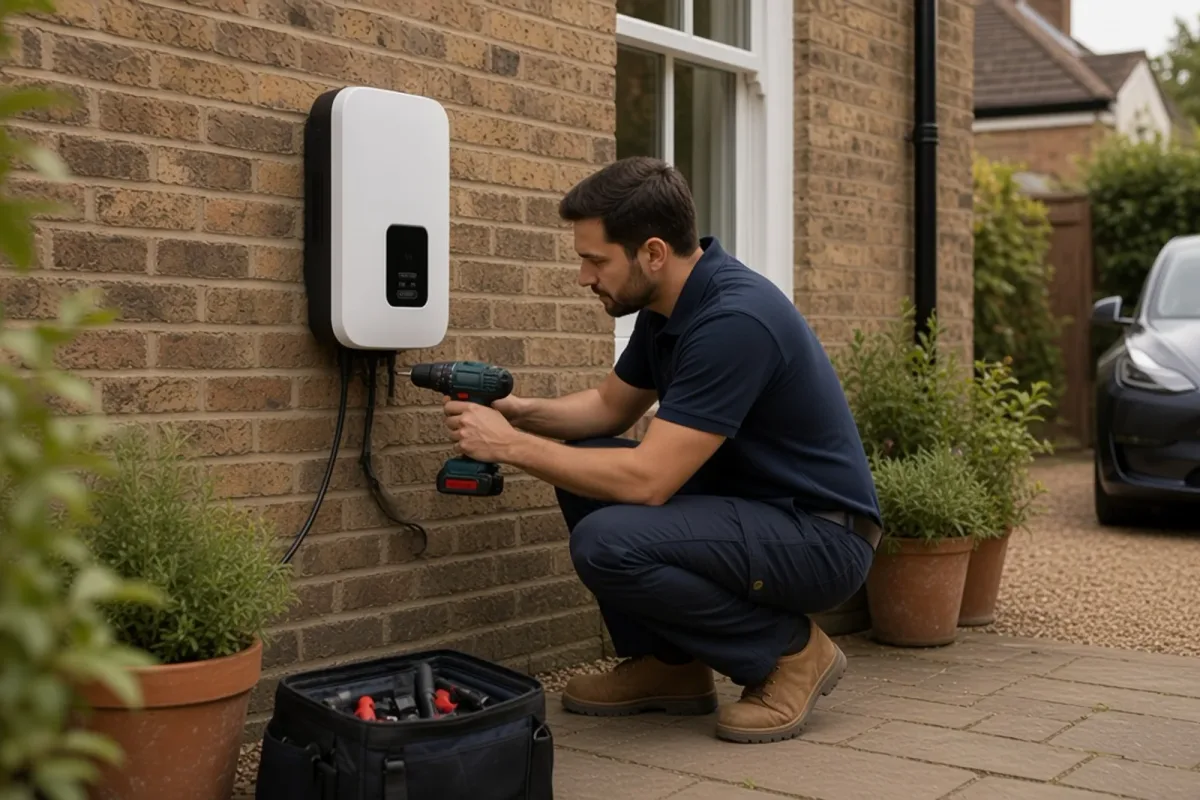
A home EV charger needs little maintenance. Look over the unit and cable every month or two for damage, keep the plug and socket clean and dry, coil the cable on its holster, accept firmware updates, and press the test button if the charger has one. Have the charger and its circuit inspected by an electrician every few years, usually alongside the home's electrical condition report.
Checks you can do yourself
A quick look every month or two catches most problems early. Do not open the charger; the checks are external only.
- Cable sheath free of cuts, crush marks and kinks
- Plug pins and the car socket clean, dry and not discoloured
- Holster or hook holding the plug off the ground
- Charger case uncracked and firmly fixed to the wall or post
- No warmth, smell or buzzing from the unit after a charge
- App online and firmware up to date
Looking after the cable
The cable takes the most wear. Driving over it, leaving it in puddles or wrapping it tightly round a hook all shorten its life. Coil it loosely on the holster after each charge and keep the plug off the ground so water and grit do not get into the pins.
In winter, ice in the plug can stop it latching. Keep the plug in its holster or cover rather than lying on the drive. Replace a damaged cable rather than taping it.
Professional inspection
There is no legal service interval for a home charger, but the circuit is part of the home's electrical installation. Electricians commonly recommend a periodic inspection of a home installation every ten years for owner-occupiers, and every five years for rented homes, where it is required in England. An outdoor EV charger is a good reason to have it checked more often.
A useful inspection tests the circuit, the RCD protection, the earthing arrangement and any open-PEN device, and checks fixings and seals. Workplace chargers sit under the employer's electrical safety duties and usually need regular inspection.
| Task | How often | Who |
|---|---|---|
| Visual check of unit and cable | Every 1 to 2 months | You |
| Press the test button, if fitted | As the manual says | You |
| Firmware updates | When offered | You, through the app |
| Clean plug and holster | As needed | You |
| Electrical inspection of the circuit | Every few years, and when renting | Electrician |
Warranty and records
Most home chargers carry a three year warranty, some longer. Keep the installation certificate, the commissioning details and the serial number together, because a manufacturer will ask for them in a claim.
If you move house, the charger stays with the property unless you agree otherwise. Pass the paperwork to the buyer.
Frequently asked questions
Does a home EV charger need servicing?
Not a routine service. Regular visual checks, firmware updates and an electrical inspection every few years are enough for most homes.
How long does a home EV charger last?
Typically ten years or more. The cable usually wears before the unit.
Can I clean my EV charger?
Wipe the case with a damp cloth with the charger idle. Keep water out of the plug and socket, and never use a pressure washer on it.
Does a rented home need its charger inspected?
The charger circuit is covered by the landlord's electrical safety inspection in England, which is required at least every five years.
Core buying guides
Start with these high-intent guides, then dig into the rest of the library.
Related guides
Sources and further reading
How this guide was prepared
This guide was written by the Local EV Installers Editorial Team. We compare official guidance, legislation and established consumer information, separate general information from project-specific advice, and show publication dates and sources. We do not accept installer accreditation claims at face value.