
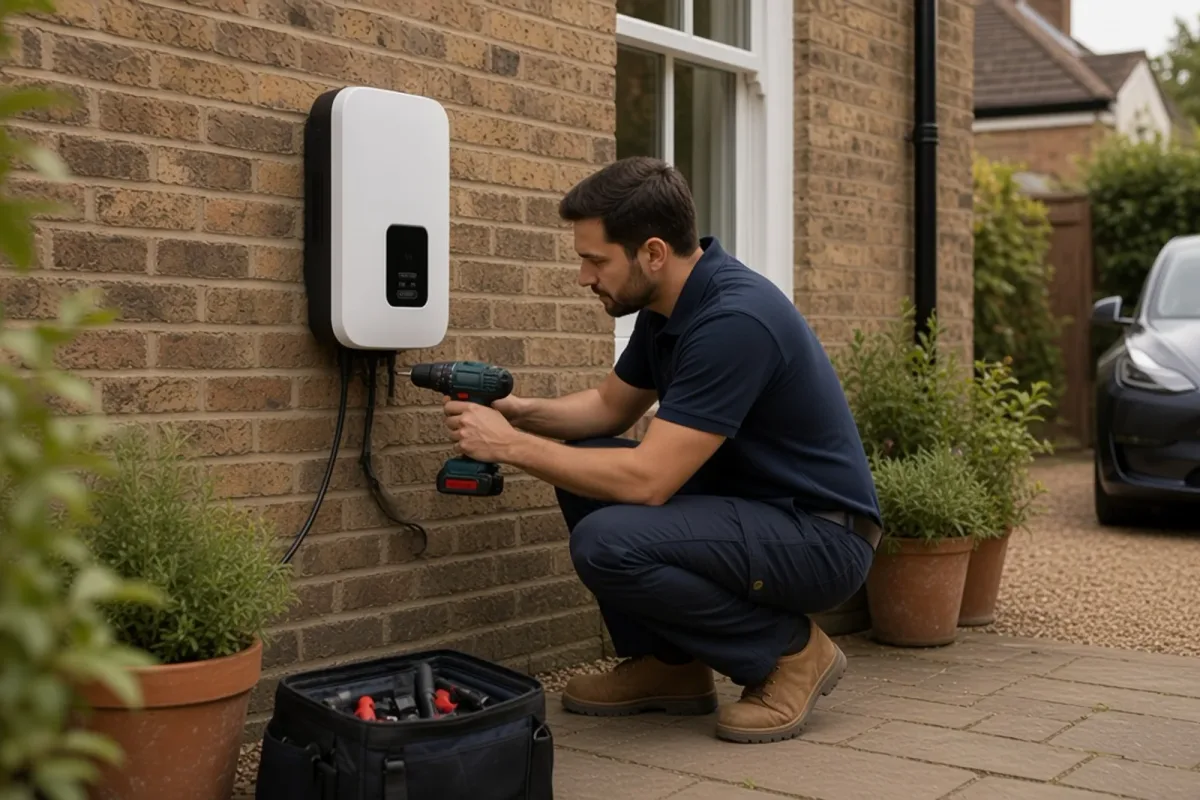
An EICR, or electrical installation condition report, is not a legal requirement before fitting a home EV charger, but the installer must check that the existing installation is safe to connect to. In older homes, an EICR is a sensible step if the wiring has not been checked for years, because faults it finds may need fixing before the charger can be added. In rented homes in England, landlords must already hold a current report.
What an EICR is
An EICR is an inspection and test of a home's fixed wiring by a qualified electrician. It records defects using codes: C1 for danger present, C2 for potentially dangerous, C3 for improvement recommended, and FI for further investigation.
It is different from the installer's EV survey, which focuses on the supply, the consumer unit, the earthing and the cable route for the charger.
When it is worth getting one
If the EICR finds C1 or C2 defects, they should be fixed before more load is added. That can include a consumer unit upgrade, which the charger may need anyway.
- The home has old wiring or an old fuse box
- There is no record of an inspection in the last ten years
- You have just bought the house
- The installer's survey raised concerns
- Other big electrical loads are planned, such as a heat pump
Rented homes
In England, private landlords must have the electrical installation inspected and tested at least every five years and give tenants a copy of the report. A new charger circuit is added to the installation and covered by future reports.
If you are a tenant asking for a charger, the landlord's existing report helps the installer plan the job.
| Situation | Is an EICR needed first? |
|---|---|
| Modern consumer unit, recent inspection | Usually not |
| Old wiring or fuse box | Strongly advisable |
| Just moved in, no records | Advisable |
| Private rented home in England | Landlord must already hold a current one |
Cost and timing
An EICR typically takes a few hours for a small home and longer for larger ones. Book it a few weeks before the charger so any repairs can be done first. Some installers can arrange both together.
After the charger is fitted, you receive an electrical installation certificate for the new circuit, which sits alongside the EICR.
Frequently asked questions
Is an EICR required before installing an EV charger?
Not legally, but it is sensible in older homes, and the installer must be satisfied the existing installation is safe.
What does C2 mean on an EICR?
Potentially dangerous. It should be fixed before adding a new load such as an EV charger.
Do landlords need an EICR?
Yes, private landlords in England need a report at least every five years.
Can my EV installer do an EICR?
Many electricians who fit chargers also carry out EICRs. Ask when booking.
Core buying guides
Start with these high-intent guides, then dig into the rest of the library.
Related guides
Sources and further reading
How this guide was prepared
This guide was written by the Local EV Installers Editorial Team. We compare official guidance, legislation and established consumer information, separate general information from project-specific advice, and show publication dates and sources. We do not accept installer accreditation claims at face value.