
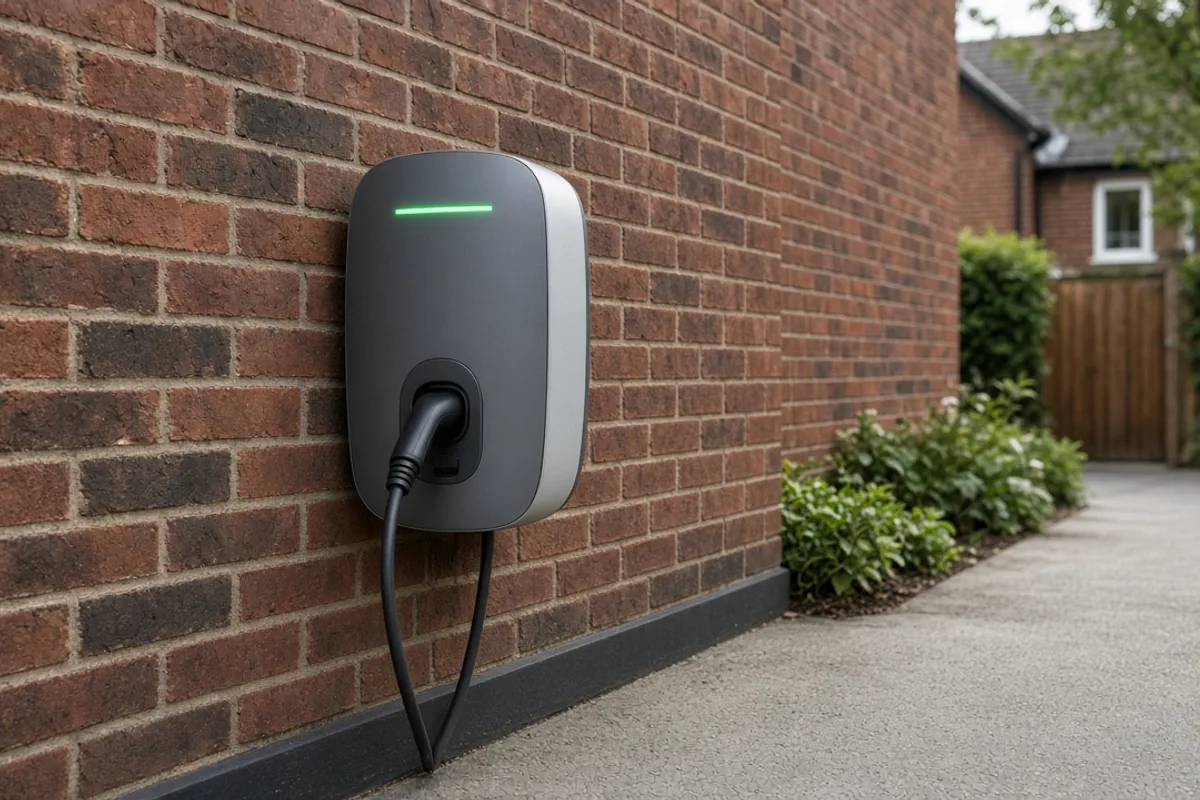
In England and Wales, a homeowner is not banned from doing their own electrical work, but a new EV charger circuit is notifiable under Part P and must meet the wiring regulations and the specific EV charging requirements, including protection against open-PEN faults. In practice, most people should use a qualified installer: grants require an authorised installer, many manufacturers' warranties require professional installation, and the network operator must be notified.
What the rules say
Adding a new circuit from the consumer unit is notifiable electrical work in England and Wales. A registered electrician self-certifies it through their scheme. If you do it yourself, you must notify building control before starting and pay for inspection, and the work must meet the wiring regulations.
EV charging has extra requirements on earthing, RCD protection and open-PEN fault protection. The IET publishes a code of practice for EV charging installations, and installers work to it.
- New circuit: notifiable under Part P in England and Wales
- Network operator must be told about the charger
- Smart charge point rules apply to the charger itself
- Grant schemes require an authorised installer
Why most people use an installer
Beyond the law, three practical reasons push people to a professional. The government chargepoint grants for renters and flat owners are only paid through authorised installers. Many charger makers only honour the warranty when the unit is installed by a qualified electrician. And the installer handles the network operator notification and gives you the certificate that insurers and buyers ask for.
An EV charger draws a high current for hours at a time. A poor connection or the wrong protection can cause overheating or a shock risk, which is not the place to learn on the job.
What you can do yourself
You can save time and money by preparing well. Measure the cable route, photograph the consumer unit and meter, check the Wi-Fi signal where the charger will go, and clear the wall. Some homeowners dig the trench for a buried cable themselves before the electrician arrives; agree the depth and route with them first.
You can also choose the charger, compare tariffs and decide where the car will park, so the installer's visit goes smoothly.
Plug-in and portable options
If you want to avoid installation, a three-pin portable charger plugs into a normal socket and charges slowly. It is fine for occasional use or a plug-in hybrid, but it is not designed to run every night at full current on any socket. Have the socket and circuit checked first.
For most drivers who charge at home every night, a properly installed wallbox is safer, faster and cheaper to run on a smart tariff.
Frequently asked questions
Is it illegal to install your own EV charger?
Not in itself, but the work is notifiable, must meet the wiring regulations and EV-specific requirements, and the network operator must be told.
Can I get a grant if I install the charger myself?
No. Government chargepoint grants are paid through authorised installers.
Will a DIY install void the charger warranty?
Often yes. Many manufacturers require installation by a qualified electrician.
What can I do myself to reduce the cost?
Plan the cable route, clear access, check Wi-Fi and, by agreement with the electrician, dig a cable trench.
Core buying guides
Start with these high-intent guides, then dig into the rest of the library.
Related guides
Sources and further reading
How this guide was prepared
This guide was written by the Local EV Installers Editorial Team. We compare official guidance, legislation and established consumer information, separate general information from project-specific advice, and show publication dates and sources. We do not accept installer accreditation claims at face value.