
Most UK home chargers mount on a sound external or garage wall at a usable height for the cable and connector. Where walls are weak, distant or heritage-sensitive, a freestanding pedestal or post can place the outlet beside the parking bay. Mounting choice affects foundations, cable length, appearance and cost. Pick the position your daily parking actually uses.
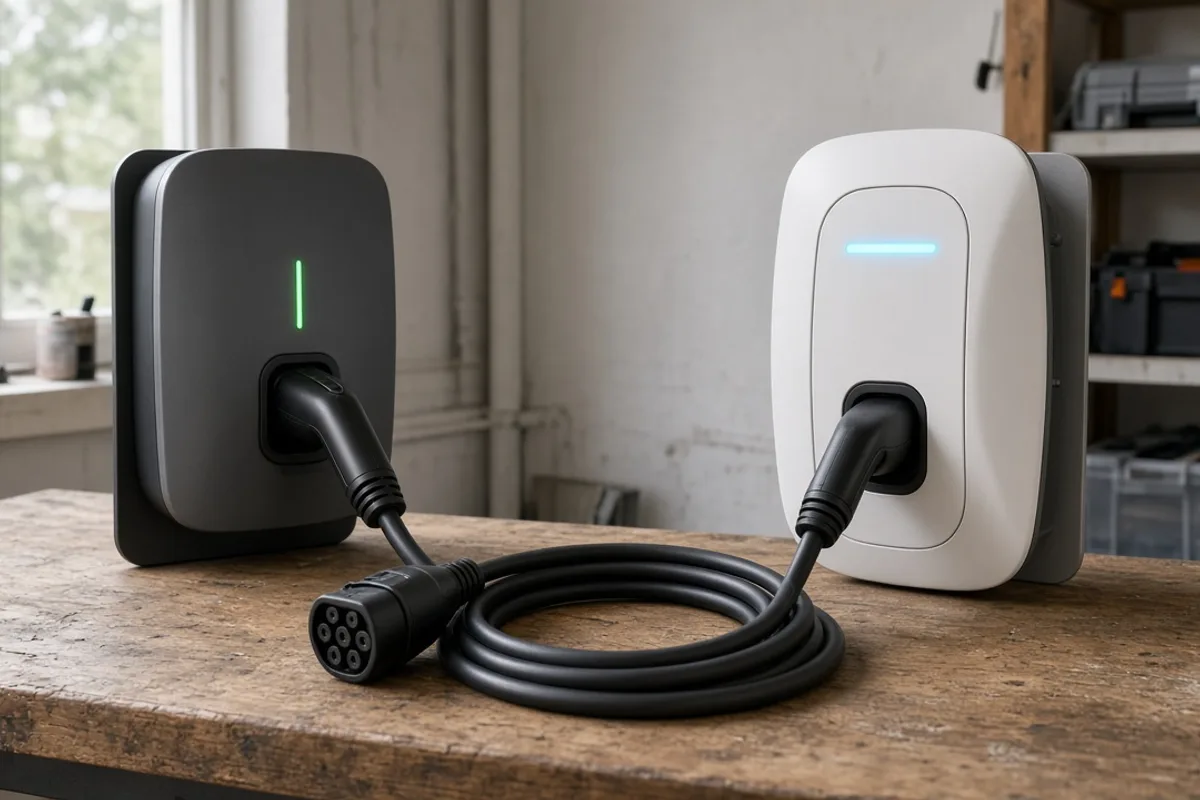
Wall mounting done properly
The substrate must take the fixings for the unit weight and cable tug forces. Poor brickwork, insulated render systems and fragile cladding need specialist fixing strategies or an alternative mount. Manufacturer templates set height and clearance expectations.
Keep the connector reachable without dragging across sharp edges, and avoid positions where a car door regularly strikes the unit.
- Check for buried services before drilling.
- Allow maintenance access and isolation visibility.
- Consider future fencing or landscaping that could block the unit.
Pedestals and posts
Freestanding solutions help on open drives, listed elevations and timber outbuildings that should not carry the charger. They need a designed foundation, cable entry protection and sometimes impact awareness in tight turning areas.
Posts can look cleaner than long surface cables, but civil costs rise. Ask for foundation and making-good inclusions explicitly.
Tethered versus untethered ergonomics
Tethered units need somewhere safe to hang the cable without creating a trip. Untethered sockets rely on you storing a separate lead. Mounting height and orientation should match the choice.
Households with different vehicle charge-port positions sometimes prefer untethered flexibility. Others prefer the grab-and-plug simplicity of tethered leads.
Survey outputs worth demanding
A sketch with dimensions, proposed height, cable route and mount type prevents installation day arguments. If the preferred wall fails inspection, agree the fallback pedestal price before work begins.
Lighting and camera coverage are optional comforts, not electrical necessities, but they influence nighttime usability on dark drives.
- Reject mounts that force the cable across a public footway.
- Keep snow, leaf gutters and downpipes out of the connector zone.
- Confirm warranty rules for non-wall manufacturer kits.
Frequently asked questions
Can I mount a charger on a wooden fence?
Usually a poor idea. Fences move and rarely provide a durable, manufacturer-approved fixing. Use a proper wall or engineered post.
How high should the charger be?
Follow the manufacturer instructions and practical cable handling. Accessibility needs may justify adjustments within approved ranges.
Are pedestals always more expensive?
They often add foundation and civil cost, but they can avoid expensive facade work or very long wall chasing, so total project cost can still favour a post.
Can two cars share one pedestal with two outlets?
Some commercial and domestic dual offerings exist, subject to load management and supply capacity. Survey the electrical limit before buying the hardware look you want.
Core buying guides
Start with these high-intent guides, then dig into the rest of the library.
Related guides
Sources and further reading
How this guide was prepared
This guide was written by the Local EV Installers Editorial Team. We compare official guidance, legislation and established consumer information, separate general information from project-specific advice, and show publication dates and sources. We do not accept installer accreditation claims at face value.