
A Volkswagen ID.3 is a battery-electric electric hatch. The ID.3 is a battery-electric hatch. UK cars vary between about 7.2 kW and 11 kW AC depending on specification. Confirm the car. A single-phase supply makes 11 kW hardware idle capacity. A straightforward driveway 7 kW job for a Volkswagen ID.3 often sits around £800 to £1,400 including VAT in September 2026, and only when the board and the cable run are simple.
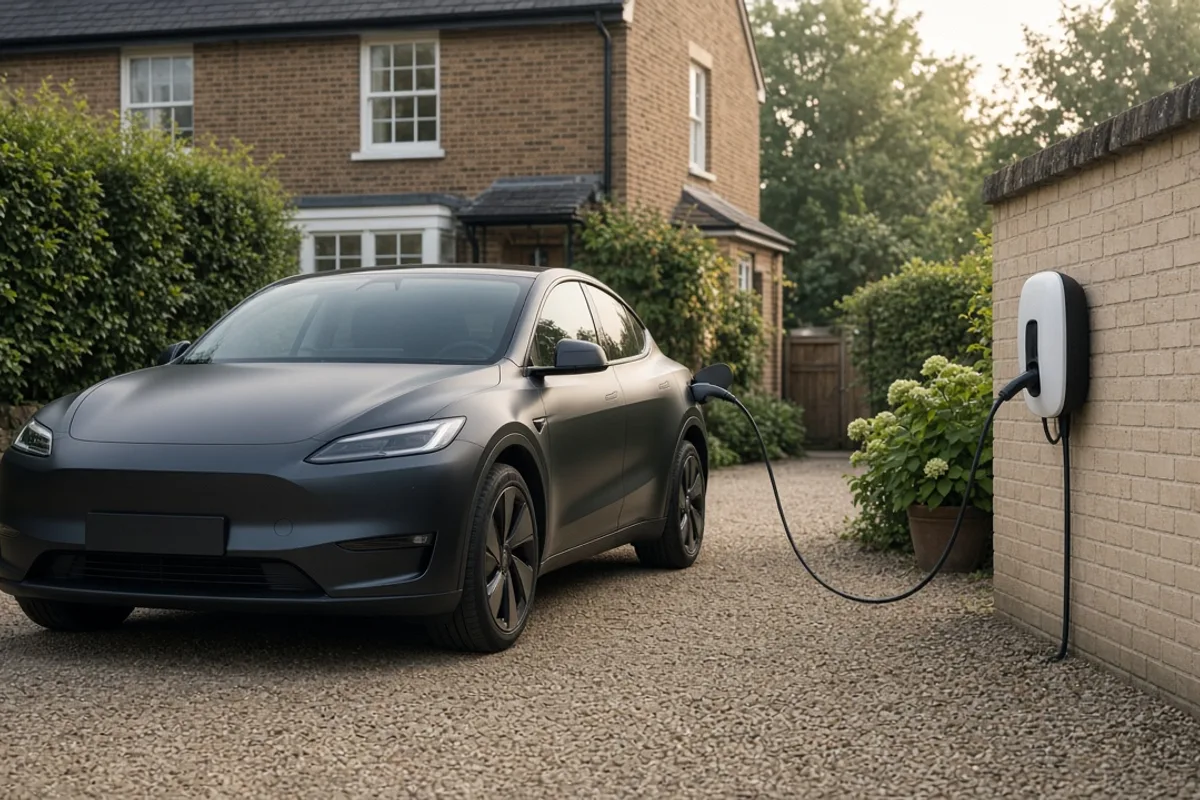
The AC limit on a Volkswagen ID.3
The ID.3 is a battery-electric hatch. UK cars vary between about 7.2 kW and 11 kW AC depending on specification. Confirm the car. A single-phase supply makes 11 kW hardware idle capacity.
Measure this hatch, not an ID.4. The cars are related and the parked lengths are not the same.
- Volkswagen ID.3 is battery-electric, so home Type 2 AC is the daily fill
- Read the Volkswagen ID.3 handbook AC figure for this model year
- Ignore public CCS speeds when you are pricing the driveway
Parking a Volkswagen ID.3 against the wallbox
Hatches are easier to site than an ID. Buzz, but the port is often on a rear quarter. A front-wall box can still need a longer lead if you reverse in.
Photograph the Volkswagen ID.3 in the stance you will use on a wet weeknight, including a second car or a bin if either crosses the lead.
What the cut-out allows a Volkswagen ID.3
A Volkswagen ID.3 home charger is a demand connection. It is not a G99 generation application, and the installer notifies the network after they have seen the board.
What to test on handover with a Volkswagen ID.3
A smart schedule matched to the tariff is worth more on a Volkswagen ID.3 than a wallbox rating the house cannot supply. Test that schedule with this car before the installer leaves.
The Volkswagen ID.3 quote, line by line
A straightforward driveway 7 kW job for a Volkswagen ID.3 often sits around £800 to £1,400 including VAT in September 2026, and only when the board and the cable run are simple.
The written scope for a Volkswagen ID.3 should name the charger, tether or socket, route, board work, earthing method, making good and exclusions.
Frequently asked questions
Is the Volkswagen ID.3 fully electric?
Yes. The Volkswagen ID.3 is a battery-electric electric hatch. Home charging is Type 2 AC. The ID.3 is a battery-electric hatch. UK cars vary between about 7.2 kW and 11 kW AC depending on specification. Confirm the car. A single-phase supply makes 11 kW hardware idle capacity.
Will a faster wallbox fill a Volkswagen ID.3 quicker at home?
The ID.3 is a battery-electric hatch. UK cars vary between about 7.2 kW and 11 kW AC depending on specification. Confirm the car. A single-phase supply makes 11 kW hardware idle capacity. Measure this hatch, not an ID.4. The cars are related and the parked lengths are not the same.
How long a lead does a Volkswagen ID.3 need?
Hatches are easier to site than an ID. Buzz, but the port is often on a rear quarter. A front-wall box can still need a longer lead if you reverse in.
What should a Volkswagen ID.3 driveway install cost?
A straightforward driveway 7 kW job for a Volkswagen ID.3 often sits around £800 to £1,400 including VAT in September 2026, and only when the board and the cable run are simple. It is a planning band, not a quotation.
Core buying guides
Start with these high-intent guides, then dig into the rest of the library.
Related guides
Sources and further reading
How this guide was prepared
This guide was written by the Local EV Installers Editorial Team. We compare official guidance, legislation and established consumer information, separate general information from project-specific advice, and show publication dates and sources. We do not accept installer accreditation claims at face value.