
Three-phase EV charger installation costs more than a standard single-phase 7kW job because you may need a three-phase supply, a suitable distribution board and a higher-capacity circuit. If three-phase is already on site, an 11kW or 22kW wallbox can still exceed the usual £800 to £1,400 domestic band once hardware and protection are included. If the DNO must reinforce or convert the supply, budgets can jump by thousands. Confirm vehicle AC limits before paying for power you cannot use.
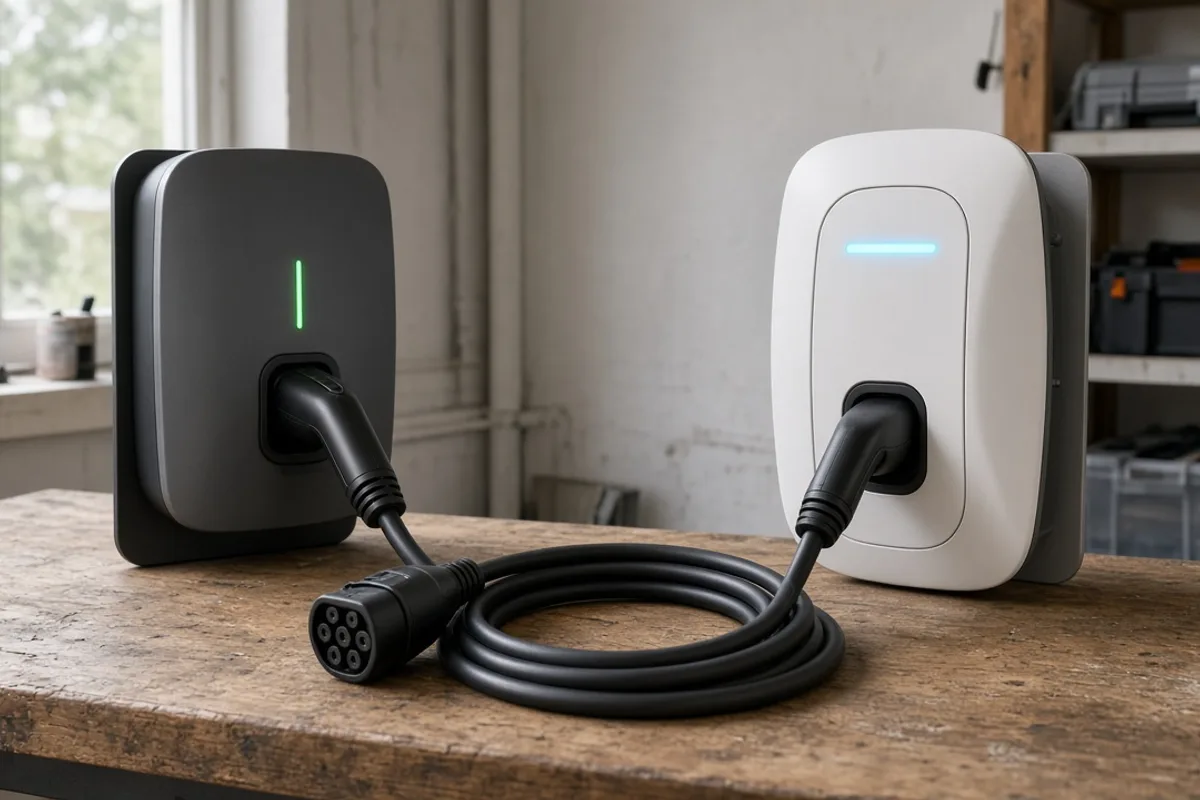
Single-phase versus three-phase in plain terms
Most UK homes are single-phase. That typically supports a 7kW AC charger comfortably. Three-phase supplies, more common on farms, workshops, larger houses and commercial premises, can support higher AC rates such as 11kW or 22kW where the vehicle onboard charger allows it.
The car is the bottleneck as often as the wallbox. Many mainstream EVs cannot draw a full 22kW AC even if the charger offers it. Paying for unused capacity is a common budgeting mistake.
Cost layers to expect
If three-phase already feeds a ready board near the parking bay, the incremental cost may be mainly the higher-power charger, thicker cable and appropriate protective devices. That can still sit above a simple 7kW driveway quote.
If you need a new three-phase service, DNO connection charges, excavating for a new supply and a new board dominate. Those works are project-specific and need formal quotations from the network operator as well as the charger installer.
- Existing three-phase nearby: often a higher wallbox quote than 7kW, not a full supply rebuild
- New three-phase service: DNO fees plus civils and board work, frequently thousands
- Load management: may reduce the need for full reinforcement on multi-charger sites
When three-phase is worth considering
Workshops with vans that support higher AC rates, homes that already have three-phase for workshops or heat pumps, and small commercial yards with several daytime charge sessions are the usual candidates. Purely overnight home charging of one car rarely needs 22kW.
Ask the installer to model realistic daily kWh against time plugged in. A spreadsheet beats marketing labels.
Survey questions that protect your budget
Confirm available spare capacity, main fuse or cut-out arrangements, earthing, diversity with other large loads, and whether the DNO requires an application beyond standard notification. Get the charger model, cable size and protection type written into the scope.
Compare like-for-like written offers. One quote may assume existing three-phase capacity while another assumes reinforcement. Those are not competing prices for the same job.
Commercial note
Light-commercial three-phase installs often blend charger hardware with bay markings, protection against vehicle strike and sometimes payment or access control. Budget those extras separately from the electrical circuit so the wallbox cost remains comparable across suppliers.
Frequently asked questions
Can I put a 22kW charger on a single-phase home?
Not at 22kW three-phase output. Some products can be configured lower on single-phase, often around 7kW. Match the product configuration to your supply.
Will three-phase charging cut my public rapid bills?
It can reduce daytime reliance on public rapid chargers if you can top up faster at home or work, but overnight 7kW already covers many drivers. Run the numbers for your mileage.
Who arranges the DNO upgrade?
Usually the property owner or their contractor applies to the Distribution Network Operator. Your EV installer should say clearly what they will handle and what remains your responsibility.
Are grants available for three-phase upgrades?
Chargepoint grants typically contribute to eligible sockets and installation, not full service reinforcements. Read the specific OZEV scheme terms for what costs qualify.
Core buying guides
Start with these high-intent guides, then dig into the rest of the library.
Related guides
Sources and further reading
How this guide was prepared
This guide was written by the Local EV Installers Editorial Team. We compare official guidance, legislation and established consumer information, separate general information from project-specific advice, and show publication dates and sources. We do not accept installer accreditation claims at face value.