
A socketed charger uses your own Type 2 cable, the same style you carry for public posts. It suits households with two cars, a wish to lock the lead away, or a bay where a permanently attached cable would trail. A tethered unit is faster day to day if everyone can live with that one length. The electrical install is the same either way. What changes is habit, theft risk and whether guests can charge without borrowing your only cable.
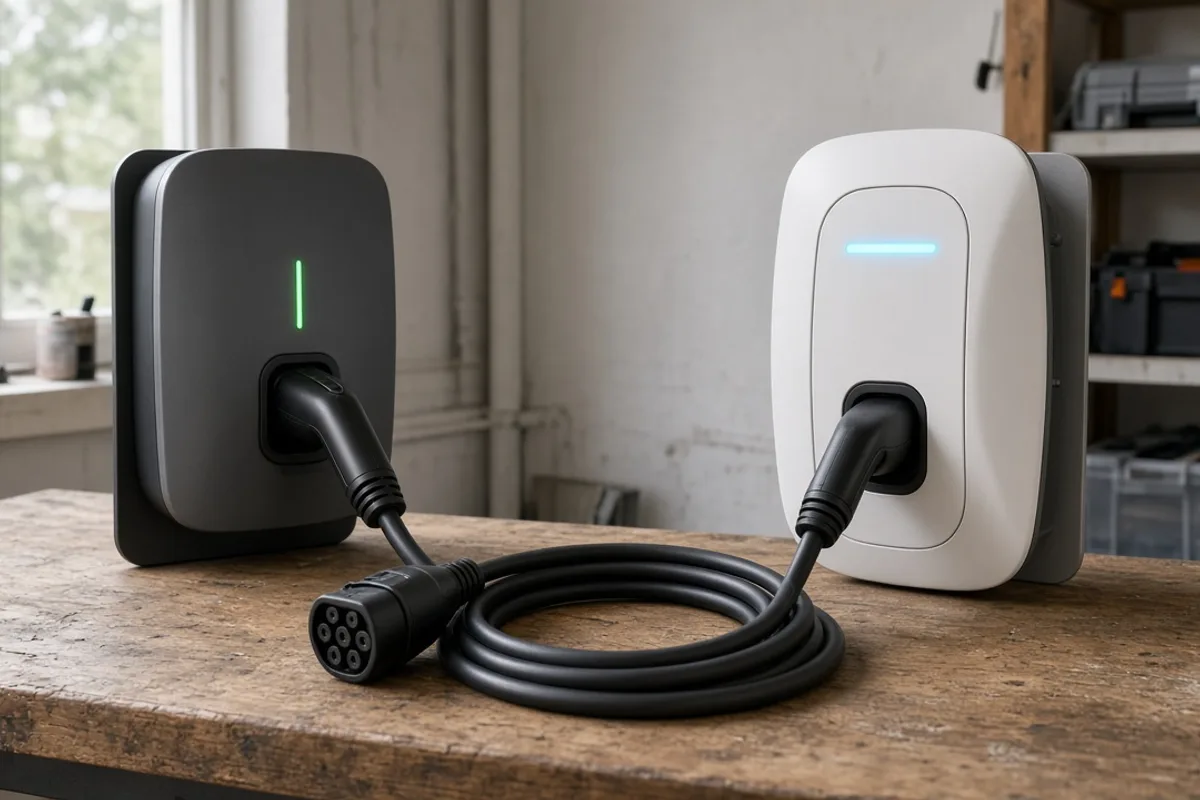
What goes wrong with socketed EV chargers and Type 2 leads
The mistake is a socketed unit plus no lead in the house on the night the car arrives, or a lead left out permanently so you have bought the worst of both.
Point at socketed EV chargers and Type 2 leads in the pack
The quote should say socketed or tethered, and the lead rating if the installer is supplying it.
Socketed EV chargers and Type 2 leads
If you choose socketed, budget a lead of the right length and current rating. A 16 amp lead on a 32 amp socket is a limit you did not mean to buy.
- Socketed uses your Type 2 lead
- Match the lead current to the charger
- Better for two cars and locked storage
- Tethered is simpler for one regular car
Socketed EV chargers and Type 2 leads: questions for the first visit
Check the socket shutter and the holster. A socket at ankle height fills with grit.
How socketed EV chargers and Type 2 leads moves the job
The saving versus a tethered unit is often small. The argument is usability.
Frequently asked questions
Can I add a tether later?
Some brands offer both. It is a parts change, not a setting.
Is theft a real issue?
In some streets, yes. A socketed unit lets you take the lead indoors.
Do smart features change?
Not because of the socket. Check the model, not the lead.
What connector is on the car?
UK cars use Type 2 for AC. You do not need a CHAdeMO or CCS lead for a home wallbox.
Core buying guides
Start with these high-intent guides, then dig into the rest of the library.
Related guides
Sources and further reading
How this guide was prepared
This guide was written by the Local EV Installers Editorial Team. We compare official guidance, legislation and established consumer information, separate general information from project-specific advice, and show publication dates and sources. We do not accept installer accreditation claims at face value.