
Shared driveways make EV charging possible, but only when access rights, neighbour consent and cable routes are clear. You generally need a lawful place to park, a mounting position you control or have permission to use, and a cable path that does not create a trip hazard or obstruct others. A survey should flag legal and practical limits early rather than selling a wallbox that cannot be used daily.
Map rights before hardware
Title plans, deeds and any residents management company rules decide who may alter surfaces, walls and gates. A parking space that you use by habit may not be exclusively yours. Installing a charger that blocks turning space or crosses a neighbour's land without agreement is a fast route to dispute.
If the drive is demised jointly, seek written neighbour agreement covering mounting position, cable route, working hours for install, and what happens if someone moves. Keep the agreement with the electrical certificates.
- Confirm exclusive use of the bay you intend to charge in.
- Avoid trailing leads across shared walking routes.
- Check gate automation and emergency access clearances.
Technical options that usually work
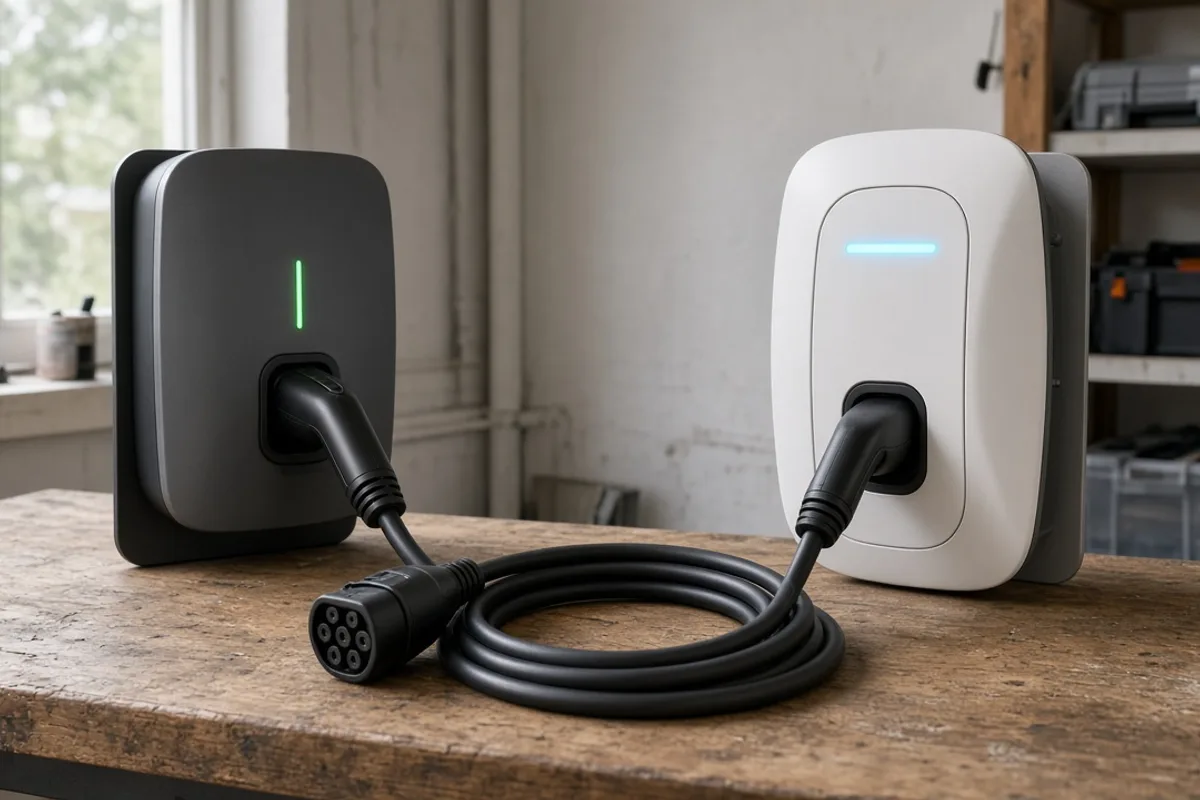
A wallbox on your own facade with a short outdoor cable to a clearly exclusive bay is the simplest pattern. Where walls are shared or unsuitable, a freestanding post on your demised area can help, subject to underground services searches and foundations.
Load management matters if two neighbours both charge from constrained supplies, or if one property hopes to feed a charger across a boundary from another consumer unit. Crossing supplies between dwellings is not a casual DIY idea and should be rejected unless properly designed and authorised.
Civil works and reinstatement on shared surfaces
Cutting a shared block-paved drive needs agreement on who pays for matching reinstatement and who accepts the visual join. Some households prefer surface containment along a boundary wall to avoid opening the carriageway at all.
Quotes should separate electrical work from civil making-good. Shared surfaces often cost more to reinstate than a private path because matching materials and neighbour expectations are stricter.
When shared drives are not practical
If you cannot secure a safe, non-obstructing cable route and a reliable overnight bay, private wallbox charging may not be realistic. Cross-pavement solutions apply to highway crossings, not to private shared courts, and still need local authority processes where relevant.
Workplace charging, destination charging and carefully planned public rapid use can bridge the gap while legal rights are clarified. An installer who promises a workaround that trails a cable over a neighbour's bin store is not solving the problem.
- Prioritise written access rights over optimistic sketches.
- Treat trip hazards as a hard stop.
- Revisit the plan if a second EV joins the household.
Frequently asked questions
Can I run a charging cable across a shared driveway?
Only if you have agreement and the arrangement remains safe and unobstructive. Temporary trailing leads are a common cause of neighbour complaints and injury risk.
Do I need my neighbour's permission for a wallbox on my house?
Not always for the wall itself, but you do need lawful use of the parking position and any cable route that affects shared land or access.
Can two households share one charger?
It is possible with clear contracts, access scheduling and electrical design, but metering, billing and liability need careful agreement. Many households prefer separate units with load management instead.
What if the management company says no?
Challenge the reason politely with a method statement, or explore alternative parking and charging arrangements. Installing against the rules risks removal at your cost.
Core buying guides
Start with these high-intent guides, then dig into the rest of the library.
Related guides
Sources and further reading
How this guide was prepared
This guide was written by the Local EV Installers Editorial Team. We compare official guidance, legislation and established consumer information, separate general information from project-specific advice, and show publication dates and sources. We do not accept installer accreditation claims at face value.