
In a multi-tenant building the car park, the riser and the landlord's supply are shared. One tenant fitting two wallboxes can use capacity everyone else will want next year. A fair scheme sets a bay quota, a load limit, a way to add tenants later and a billing method: included in service charge, sub-metered, or a commercial operator. The lease should say whether consent is needed. It usually is. OCPP or a simple managed system beats five brands and five apps.
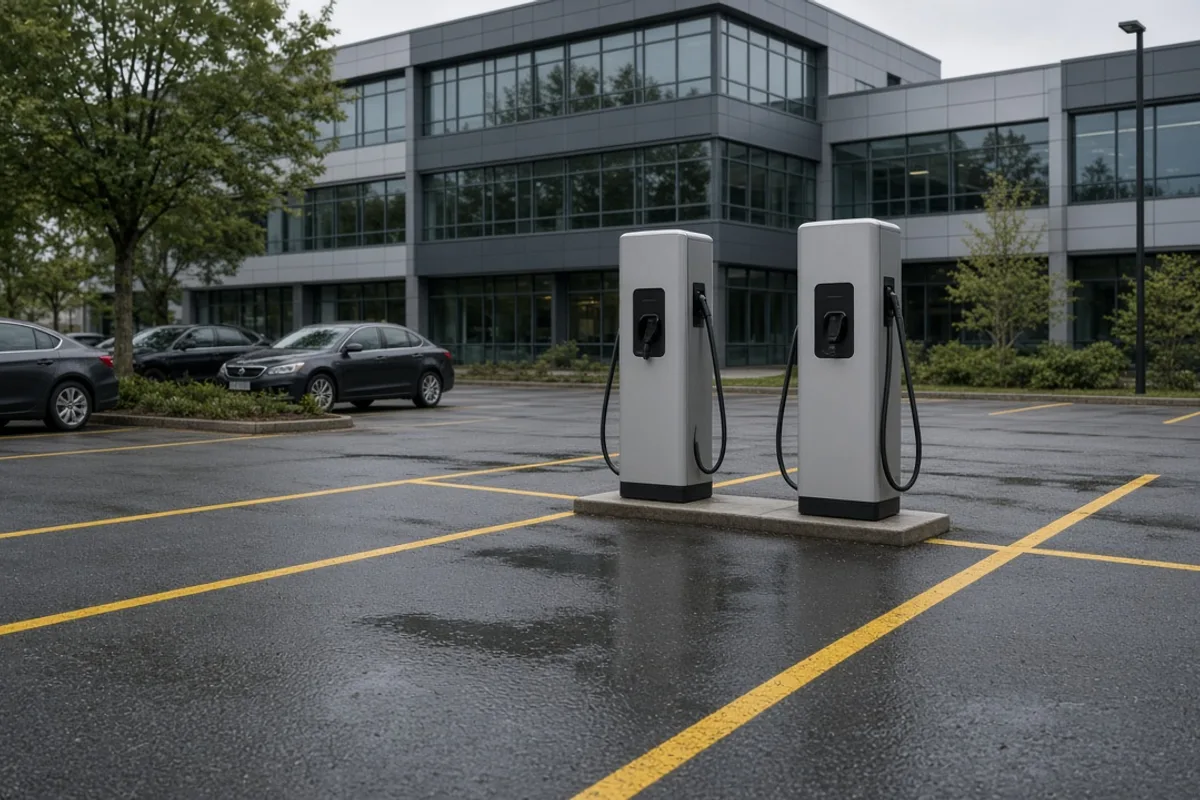
EV charging in a multi-tenant office
Survey the building intake once, not once per tenant.
- One building survey, not five
- Consent and billing in the lease conversation
- Leave capacity for later tenants
- A common back office helps
EV charging in a multi-tenant office: questions for the first visit
Decide guest bays versus dedicated bays. Dedicated bays without enforcement become a feud.
How eV charging in a multi-tenant office moves the job
The first tenant's cheap install can block the landlord's proper scheme. A little coordination saves a rip-out.
What goes wrong with eV charging in a multi-tenant office
The mistake is a tenant's electrician clipping trunking through the car park with no fire stopping and no consent.
Point at eV charging in a multi-tenant office in the pack
Propose a building standard: socket type, load per bay, and who may install.
Frequently asked questions
Can each tenant claim a workplace grant?
Only if each employer is eligible in their own right. The landlord's kit and the tenant's kit can be different applicants. Do not double claim the same socket.
Who owns the cable?
Write it down. It should usually be the landlord's if it is in common parts.
What if the intake is full?
Then the network conversation happens before more sockets, or you manage the load down.
Can we ban individual installs?
If the lease allows the landlord to set a standard, yes. That can be the grown-up route.
Core buying guides
Start with these high-intent guides, then dig into the rest of the library.
Related guides
Sources and further reading
How this guide was prepared
This guide was written by the Local EV Installers Editorial Team. We compare official guidance, legislation and established consumer information, separate general information from project-specific advice, and show publication dates and sources. We do not accept installer accreditation claims at face value.