
Industrial units often have three-phase power and a yard, which is a better starting point than a terrace. They also have welders, compressors and a landlord. Car charging for staff and van charging for a fleet should be designed around the spare capacity at the times you actually charge. A 22 kW post is useful only if the vans can take it and the supply can spare it while the workshop runs. HGV tractor charging is another project entirely and should not be hidden inside a staff-bay quote.
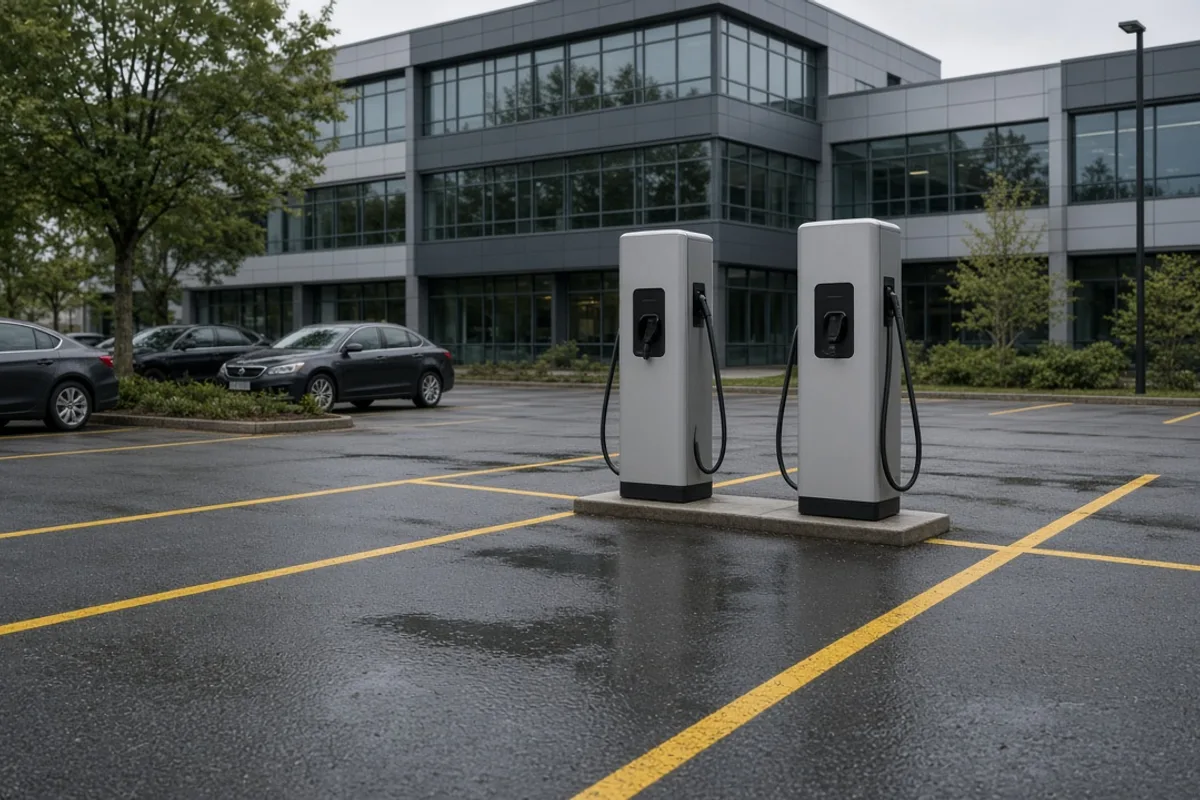
A miss that shows up later: eV charging at an industrial unit
The mistake is ten sockets on a board that trips every time the compressor and the kettle coincide.
Write eV charging at an industrial unit into the quote
The quote should state available capacity, managed load and which vehicles are in scope.
EV charging at an industrial unit
Ask the landlord before you cut the yard. The supply head may serve more than your demise.
- Three-phase is common and not infinite
- Vans and staff cars are different dwell times
- Landlord supplies may be shared
- HGVs are out of scope unless specified
Check eV charging at an industrial unit before you accept a price
Separate staff cars, overnight vans and loading bays on the drawing.
The price effect of eV charging at an industrial unit
A workplace voucher, if you qualify, will not pay for a new substation. Get the capacity answer first.
Frequently asked questions
Can we use the existing 16 amp sockets?
Not as a permanent fleet strategy. A proper charger circuit is still required.
Is OCPP worth it?
If you have several bays and want records, yes. For one van, a simple unit may do.
What about tenants next door?
If you share a supply, their load is your constraint. The landlord should disclose it.
Do we need planning permission?
Often the electrical work is permitted and a material change of yard or a public charger is not. Check if the public can use it.
Core buying guides
Start with these high-intent guides, then dig into the rest of the library.
Related guides
Sources and further reading
How this guide was prepared
This guide was written by the Local EV Installers Editorial Team. We compare official guidance, legislation and established consumer information, separate general information from project-specific advice, and show publication dates and sources. We do not accept installer accreditation claims at face value.