
A normal home wallbox is a one-way AC charger. In a power cut it does not charge the car, and the car does not silently power the house through it. Vehicle-to-home needs a compatible car, a bidirectional charger and an installation that can disconnect from the street so you do not energise a line where people are working. If the lights go out, treat the wallbox as off. Do not backfeed the house from the car or from a generator through a lead and a socket.
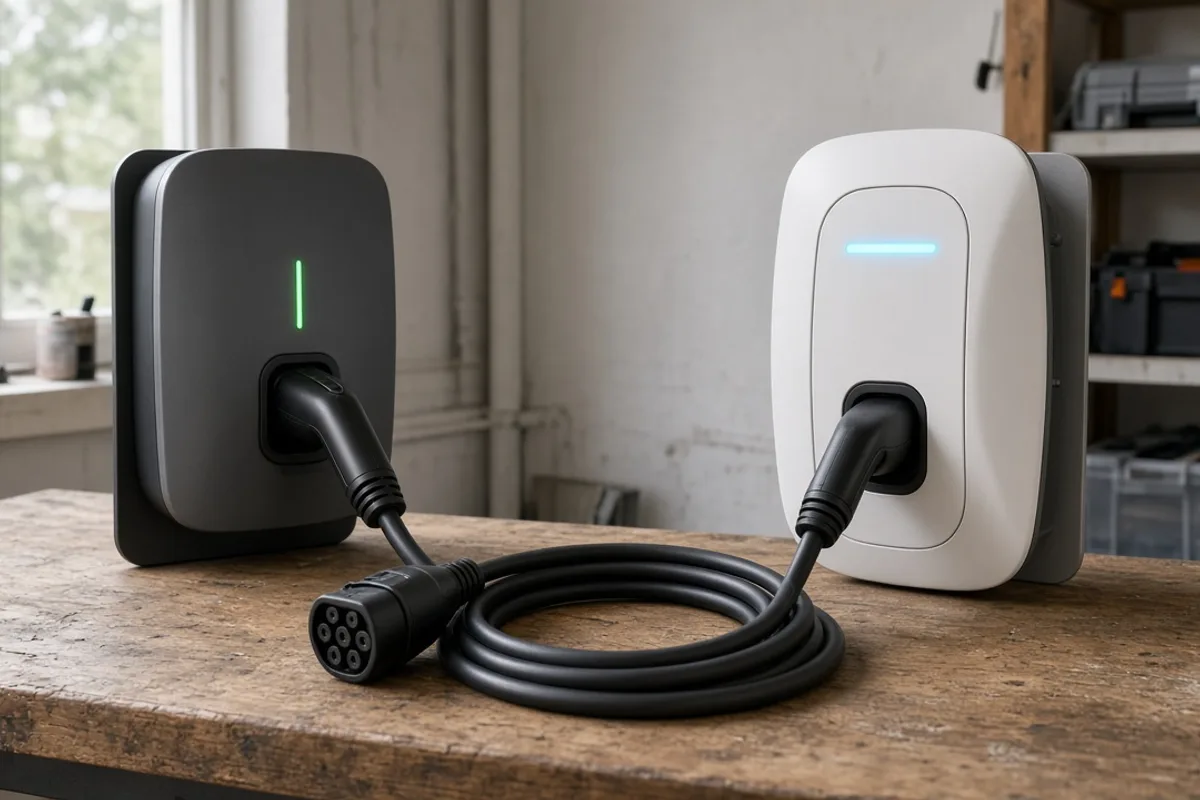
Off means off
The charger is a load on the consumer unit. When the supply fails, that circuit dies with the lights. Any session in progress stops. The car may show a charging error until the mains returns. That is expected, not a broken contactor.
The traction battery is not a standby generator just because a cable is plugged in. The inverter and the changeover equipment are a different product, designed so the house cannot feed the public network while it is dead.
Why a homemade backfeed is dangerous
Plugging a generator or a car inverter into a household socket can put voltage onto the street cable. People repairing the fault can be hurt, and the house installation can be damaged when the mains comes back out of phase with whatever you rigged. This is not a clever hack for a winter storm.
If you want backup, ask for a system that islands: it disconnects the house from the grid, then supplies chosen circuits. A kettle on the whole-house board and a car charger left in that island will flatten a small battery into the vehicle. The designer should say which circuits stay on, and the charger should not be one of them unless you mean it to be.
Solar, a home battery, and the car as a third thing
A hybrid inverter with a home battery may keep a backup circuit alive if it was installed to do that. Many solar systems shut down entirely in a power cut so they do not export to a dead street. Read what yours actually does before you count on the freezer.
Leaving the EV charger on the backed-up side is usually a mistake. A 7kW car will outrun a modest home battery. Keep the wallbox on the grid side so it simply waits.
Vehicle-to-home is a named project: compatible car, bidirectional hardware, and an earthing arrangement for island mode. Most wallboxes fitted in 2026 are not that project. Do not buy a one-way unit because a badge says future ready.
When the street comes back
Check the car rather than assuming the session carried on. Some chargers resume, some wait for the next schedule, some want an acknowledgement in the app. If you needed the miles for an early start, look before you go to bed again.
A power cut is also a good moment to notice whether the charger came back in a safe state: no tripped protective device, no burnt smell, no attempt to start at full rate into a car that is already full. If a breaker opened, leave it off and ask the installer before you reset it repeatedly.
- Wallbox on the grid side of any backup circuit
- No leads from the car into a house socket
- A note of what the unit does when mains returns
- Vehicle-to-home quoted as its own job, if you want it
What this does not change about the install
You still want a dedicated circuit, the right protection, and open-PEN measures where the supply is PME. Backup dreams do not remove those. A power cut is rare. A missing earth fault arrangement is with you every night.
VAT, grants and the September 2026 driveway cost band are about the ordinary install. Islanding equipment sits outside that band. Get it priced as an extra with a make and model, or leave it out.
Frequently asked questions
Can I run the fridge from the car if I already have a wallbox?
Not through a normal one-way wallbox. You would need a vehicle-to-home or other backup design that islands the house. Do not improvise with a lead.
Will the car battery be damaged by the interrupted charge?
Stopping because the mains failed is a normal end to a session. Check the car when the power returns. A one-off interruption is not a reason to replace the charger.
Our solar stayed on in the last cut. Should the charger use that?
Only if the designer put the charger on a backed-up circuit on purpose and sized it. Otherwise leave the car charger off that backup so a small battery is not emptied into the vehicle.
Does a power cut need a new electrical certificate?
Not by itself. If something tripped and will not reset, or you see damage, stop and call the installer. Do not keep resetting a breaker that opens immediately.
Core buying guides
Start with these high-intent guides, then dig into the rest of the library.
Related guides
Sources and further reading
How this guide was prepared
This guide was written by the Local EV Installers Editorial Team. We compare official guidance, legislation and established consumer information, separate general information from project-specific advice, and show publication dates and sources. We do not accept installer accreditation claims at face value.