
A home EV charger should be on its own final circuit, sized for the load, with the right protection and isolation. That circuit runs from the consumer unit, or a dedicated enclosure, to the charger. It is not a spur taped onto the downstairs sockets, and it is not the garage light. The point is that the cable, the breaker and the tests all match a continuous 32 amp load where the charger is 7 kW.
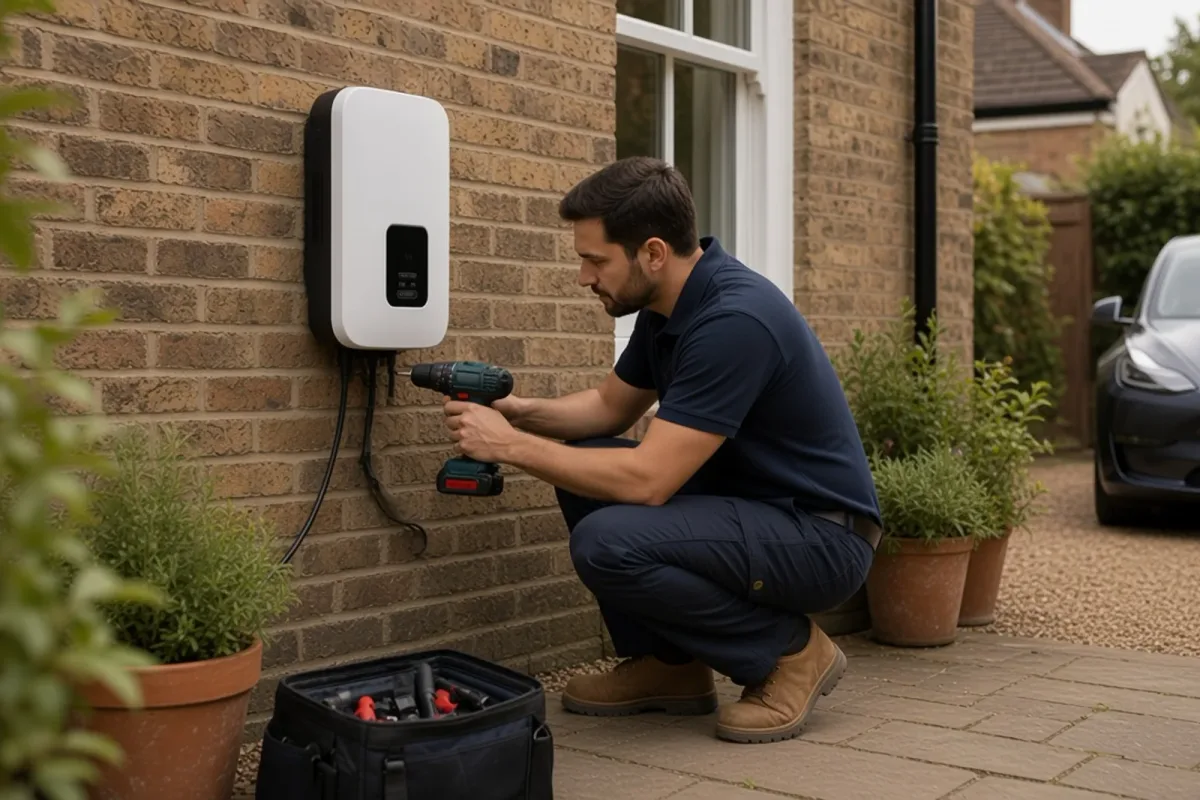
Why an EV charger needs its own circuit: questions for the first visit
If a quote says 'connect to existing garage supply' ask what that supply is. A 2.5 millimetre lighting feed or a remote socket on a long ring is not a charger circuit.
How why an EV charger needs its own circuit moves the job
The dedicated circuit is the heart of the labour and materials. A quote that is only a charger bolted to a wall, with 'connection' as a single word, is incomplete.
What goes wrong with why an EV charger needs its own circuit
The mistake is letting a kitchen fitter or a solar firm 'pop it on the board' without the design. Another is using a commando socket on the ring and calling it a charger.
Point at why an EV charger needs its own circuit in the pack
The quote should name the circuit origin, the protection, the cable and the isolator. The certificate should match those words.
Why an EV charger needs its own circuit
Shared circuits overheat, nuisance-trip, and fail inspection. They also hide the load from anyone planning the next big appliance.
- Own circuit, own protection
- Not a spur from the socket ring
- Garage supplies are often too small
- The certificate should describe that circuit
Frequently asked questions
Can I use a 16 amp commando?
A properly designed 16 amp outlet can suit a smaller charger or a plug-in hybrid limit. It still needs its own circuit, not a socket adapter.
What about two chargers?
Each needs a design. Sometimes that is two circuits, sometimes one managed point. It is never two untidy spurs.
Does the car limit make the circuit optional?
No. The fixed wiring is designed for the charger rating, not for today's state of charge.
Who decides the breaker size?
The installer, from the charger rating and the cable. You should see the number on the certificate.
Core buying guides
Start with these high-intent guides, then dig into the rest of the library.
Related guides
Sources and further reading
How this guide was prepared
This guide was written by the Local EV Installers Editorial Team. We compare official guidance, legislation and established consumer information, separate general information from project-specific advice, and show publication dates and sources. We do not accept installer accreditation claims at face value.