
Salt air does not change the need for a dedicated circuit, earthing checks or open-PEN protection on a PME supply. It does change how fast ordinary steel fixings, cheap glands and a badly placed enclosure start to look tired. On a seafront or an exposed estuary wall, ask for outdoor-rated hardware, corrosion-resistant fixings and a mounting spot that is not in the spray line. Read the warranty for words that exclude coastal corrosion.
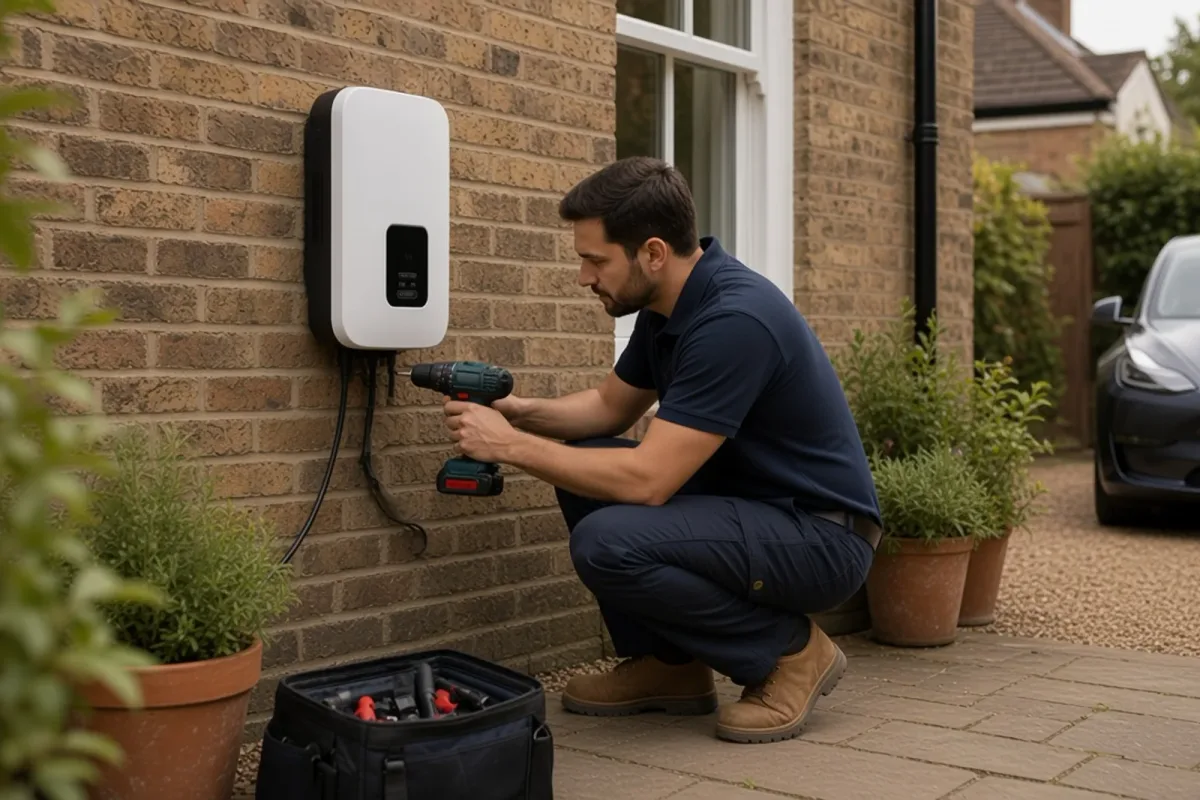
The enclosure is only as good as the holes in it
Manufacturers publish an IP rating for the charger body. That rating assumes the cable entries and fixings are made as the instructions say. A gland left finger-tight, or a lid screw replaced with a hardware-store spare, is how rain gets into a unit that looked fine on the brochure.
Ask which fixings will be used into a rendered or brick sea wall. Bare mild-steel screws rust, stain the wall and seize. Stainless or a coating the manufacturer accepts for outdoor use should be in the quote, not a surprise when the first brown streak appears.
Pick the wall, not just the house
A south-west face that takes the prevailing wind and spray will age faster than a return wall in the lee of the building. If the only lawful park is on the exposed side, say so and shorten the inspection interval rather than pretending the datasheet was written for a sheltered estate.
Do not box the charger in a homemade timber cupboard to hide it from the weather. You can trap damp, block the ventilation the unit expects, and make the lead exit worse. A proper shelter is a design question for the clearances in the manufacturer instructions, not a pallet collar.
What salt does not relax
PME supplies still need a way to deal with an open-PEN fault. A dedicated circuit is still the right shape for a 7kW class home charger on single-phase. The distribution network operator is still notified for a demand connection. None of that becomes optional because the postcode is coastal.
Type 2 AC at about 7kW remains the usual home rate. The sea does not justify a 22kW unit on a single-phase house.
- Declared IP rating and the installation manual, not a marketing photo
- Fixings and glands named in the quote
- Warranty text on corrosion and coastal sites
- A photo of the actual wall in bad weather, not a summer listing
A yearly look, not a service contract myth
Once a year, or after a named storm, look at the glands, the lead inlet and the wall behind the box. Green crust on copper, a soft lid seal or rust bleeding from a fixing is a reason to call the installer, not a reason to open the enclosure yourself.
If you let the house as a holiday home, leave a note for guests that the lead is stowed off the ground. A connector left in wet shingle is a different failure from a city driveway.
Frequently asked questions
Do I need a special marine charger?
You need a unit the manufacturer rates for outdoor use, installed as the manual says, with fixings that survive salt. A catalogue label that only says marine is not a substitute for the IP rating and the warranty wording.
Will salt air void the warranty?
Sometimes, if the warranty says so. Read that clause before you pay. An installer promise does not override the manufacturer's exclusions.
Should the charger go in the garage to avoid the salt?
Only if the car is parked where the lead can reach it without crossing a public footway. A dry garage on the wrong side of the house does not charge a car left on the sea wall.
Core buying guides
Start with these high-intent guides, then dig into the rest of the library.
Related guides
- EV charger for a terraced house with street parking
- EV Charger Installation in a New Build Home: What Buyers Should Check
- Garage vs Driveway EV Charger Siting: Which Location Works Better?
- EV charger installation for a UK semi-detached house
- Cross-pavement EV charging in the UK: gullies, channels and cables
Sources and further reading
How this guide was prepared
This guide was written by the Local EV Installers Editorial Team. We compare official guidance, legislation and established consumer information, separate general information from project-specific advice, and show publication dates and sources. We do not accept installer accreditation claims at face value.